Technanosoft Insights
Warehouse Control System Integration: Design the Recovery Boundary First
A decision-first guide to WMS-WCS authority, replay-safe commands, physical confirmation, inventory reconciliation, exception recovery, safety boundaries and pilot acceptance.

A decision-first guide to WMS-WCS authority, replay-safe commands, physical confirmation, inventory reconciliation, exception recovery, safety boundaries and pilot acceptance.
Warehouse control system integration connects digital work intent with conveyors, sorters, automated storage, robots and other equipment that move physical goods. The difficult decision is not whether two systems can exchange a message. It is whether every command, physical movement, confirmation and exception can be reconciled when a tote jams, a sensor disagrees or one side times out.
Editorial draft: November 24, 2026 · Estimated reading time: 12 minutes
Quick answer
Design warehouse control system integration around authority and recovery before choosing APIs, queues or middleware. Decide which system owns business intent, movement commands, equipment state, inventory truth and safety state. Give each command a stable identity, expected starting state, target, version and expiry. Separate accepted, started, physically completed, rejected and uncertain outcomes. Then test jams, blocked lanes, duplicate messages, delayed confirmations, manual movement and host outages. Choose a native WMS interface, vendor connector, integration layer or custom service only after the unresolved ownership and recovery gap is clear.
Key takeaways
| Question | Decision-first answer |
|---|---|
| What is the primary outcome? | One recoverable chain from warehouse intent to verified physical state and inventory truth. |
| Is message delivery the same as movement? | No. Accepted, started and physically completed are different states. |
| Should the WMS control motors and sensors? | Usually not. Business work and real-time equipment control need an explicit boundary. |
| Can a timeout be retried automatically? | Only when identity, state and replay behavior make the result safe and unambiguous. |
| What should a pilot prove? | That normal flow and physical exceptions reconcile without duplicate movement, lost inventory state or unsafe restart. |
On this page
- Who this guide is for
- Define the outcome
- Assign authority
- Create the command contract
- Model state
- Design recovery
- Keep safety separate
- Choose the boundary
- Pilot and accept
- FAQs
Who this guide is for
This guide is for distribution-center and fulfillment leaders, warehouse automation owners, controls engineers, operations teams, product leaders, enterprise architects and integration teams connecting a WMS or host system with a WCS, WES, material-flow controller, robot fleet manager or equipment interface.
It is not a machine-safety design, controls-engineering specification, lockout/tagout procedure or legal opinion. Equipment manufacturers, qualified controls and safety professionals, facility owners and applicable authorities must approve machine behavior and safe work. Business software may observe approved safety state; it must not invent or override it.
Define the outcome before selecting an interface
A connection can return HTTP success while the tote never leaves the induction point. A queue can deliver the same command twice. A conveyor can move the load while the confirmation is delayed. An operator can clear a jam manually while the host still believes the original route is active.
Define the accepted result first:
For every automated movement, one approved business intent becomes one identifiable physical outcome; the equipment and inventory states can be reconciled; uncertain results stop at a controlled boundary; and recovery does not create duplicate movement or bypass approved safety controls.
That outcome requires more than connectivity. It requires evidence across five layers:
| Layer | Evidence | Failure to avoid |
|---|---|---|
| business intent | order, work, priority, source, destination and handling constraints | equipment moves the wrong load correctly |
| command | stable command identity, version, route and expected starting state | duplicate or stale instruction is accepted |
| physical execution | zone transitions, sensor/equipment state and actual completion | digital completion is recorded without movement |
| inventory truth | load identity, location, quantity, disposition and adjustment state | physical and book inventory diverge silently |
| recovery | exception, owner, intervention, reconciliation and closure | retry or manual action produces a second outcome |

Microsoft's material-handling equipment interface documentation illustrates the pattern clearly: outbound WMS events and inbound equipment events use separate queues. Equipment processes work events and later reports outcomes such as completion or short picking. The return event can run, modify or create work. That separation makes the state model—not just transport—the center of the design.
Assign five authorities before drawing the integration
Do not begin with a box labelled “middleware.” Begin with authority.
1. Business-work authority
The WMS or host usually owns released work, order priority, inventory policy, source and destination intent, handling-unit identity and customer commitment. It decides what should happen in warehouse terms.
2. Movement-command authority
One layer must translate business work into an executable movement or route. Depending on the platform, that may be the WMS automation interface, WES, WCS or equipment-specific adapter. Avoid two systems issuing competing instructions to the same zone.
3. Physical-execution authority
The WCS, material-flow controller, robot fleet manager or PLC layer owns real-time equipment coordination within its approved scope: device readiness, interlocks, routing availability and lower-level execution. The host should not pretend a database transaction can substitute for this control.
4. Inventory-truth authority
Define when book location changes. Is inventory moved when the host issues a task, when equipment accepts it, when a source sensor clears, when the destination sensor confirms, or after a reconciled completion event? Use one approved rule for each movement class.
Oracle's route-instruction and route-confirmation flow shows why the distinction matters: induction, routing instruction and equipment confirmation are separate steps. The final lane may be determined or confirmed by the material-handling side.
5. Safety-state authority
Safety PLCs, guarded zones, emergency stops, energy isolation and approved procedures remain authoritative for safe equipment state. A WMS or integration service may receive status for workflow decisions, but it must never treat a software retry as permission to restart isolated equipment.
Record the authority map in one table before implementation:
| Decision or fact | Primary owner | Allowed writers | Confirmation source | Human override |
|---|---|---|---|---|
| load identity and requested destination | WMS | approved host workflow | released work record | inventory/operations owner |
| route command | WCS or agreed orchestration layer | one command authority | command acceptance | automation operator |
| zone occupancy | equipment/control layer | sensors and approved controls | reconciled device state | controls owner |
| inventory location | WMS | approved completion/recovery flow | physical completion evidence | inventory control |
| safe-to-run state | approved safety/control system | qualified procedures only | safety circuit/procedure evidence | authorized safety owner |
Create one command and confirmation contract
Every movement command needs enough context to reject stale, duplicate or impossible work. At minimum, define:
- Command identity: globally stable identifier plus correlation to order, work and handling unit.
- Version and sequence: which revision is current and whether ordering is significant.
- Expected starting state: current zone, load identity, status and any prerequisite confirmation.
- Requested outcome: destination zone, route class, priority and handling constraints.
- Authority and scope: issuing system, receiving subsystem and equipment zone.
- Time boundary: created time, source time zone, not-before condition and expiry or revalidation rule.
- Replay behavior: whether a repeated command returns the known result, is rejected or requires reconciliation.
- Acknowledgement states: received, accepted, rejected, started, completed, failed and uncertain.
- Exception reference: reason class, affected physical state, responsible owner and permitted next action.
- Audit evidence: original message, transformations, timestamps and final reconciliation.
Infor's current warehouse-interface guidance emphasizes carrying unique keys back into the host and simulating external transactions before relying on the interface. That is a practical principle: the return path must identify the exact work it resolves.
Treat transformations as governed logic
A normalized message may translate host locations, equipment zones, load types, priorities or exception codes. Keep those mappings versioned and testable. A successful schema conversion can still create the wrong physical instruction when a location or routing table is stale.
Reject unknown or ambiguous values. Do not silently map a new equipment exception to “other” if the resulting recovery action changes inventory or machine behavior.
Model acknowledgement, physical state and inventory separately
Use a state model that distinguishes communication from reality.
| State | Meaning | What it does not prove |
|---|---|---|
| received | integration endpoint or queue stored the message | command is valid or equipment is ready |
| accepted | command authority validated and reserved the work | movement started |
| started | equipment began the approved action | destination was reached |
| physically completed | approved sensor/control evidence supports the outcome | WMS inventory has been updated |
| inventory reconciled | host applied the approved outcome once | no downstream exception exists |
| rejected | command was not accepted | physical state is unchanged unless verified |
| uncertain | result cannot be proved | safe retry is allowed |
The uncertain state is essential. A timeout after acceptance is not the same as rejection. Before replay, query or reconcile the command identity, equipment zone, load position and host record. If no trusted lookup exists, stop the flow and route it to an accountable operator.
Keep a reconciliation ledger
For each command, retain:
- original and current command version;
- handling unit and work identity;
- source and destination zones;
- accepted and observed equipment state;
- each acknowledgement with source timestamp and receive timestamp;
- inventory transaction or pending adjustment reference;
- manual intervention and approver;
- final state and closure reason; and
- unresolved discrepancy owner.
This ledger is not an analytics copy of every PLC signal. It is the minimum evidence needed to explain and recover the business movement.
Oracle's WCS cycle-count integration shows a useful control pattern: invalid conditions are rejected, while deferred mode can create a pending adjustment for approval rather than changing inventory immediately. Use the same decision discipline for movements with ambiguous evidence.
Design recovery before happy-path automation
List physical and digital exceptions before enabling automatic release.
| Exception | Evidence to check | Safe software response | Required owner |
|---|---|---|---|
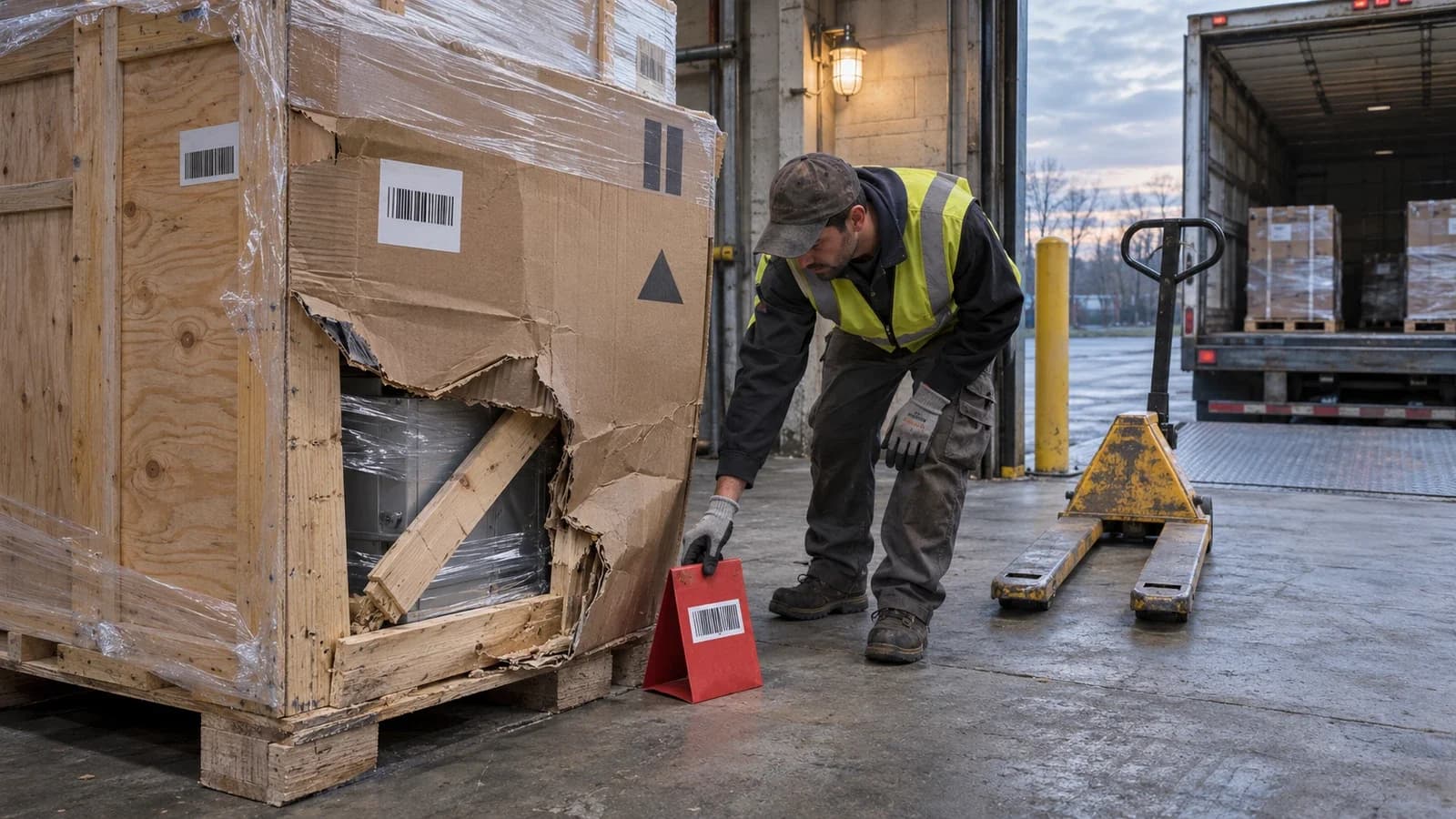
| tote or pallet jam | zone occupancy, command state, local control state | stop dependent release; mark result uncertain; preserve identity | automation operations / controls |
| destination blocked | downstream availability and reservation | hold or choose only an approved alternate route | WCS/operations policy owner |
| sensor disagreement | redundant state, equipment event and physical inspection | quarantine the transition; do not invent completion | controls and operations |
| duplicate command | command identity and known outcome | return existing result or reject; never move twice | integration owner |
| late confirmation | source time, receive time and current load state | reconcile before applying inventory | WMS/integration owner |
| equipment isolated | approved safety/control status | prevent release into the zone; never software-restart | safety/controls owner |
| manual move | physical verification and authorized intervention | record the new state and close/cancel original work once | operations/inventory control |
| host outage | buffered command/event state and expiry | continue only the pre-approved bounded mode | architecture and operations owners |
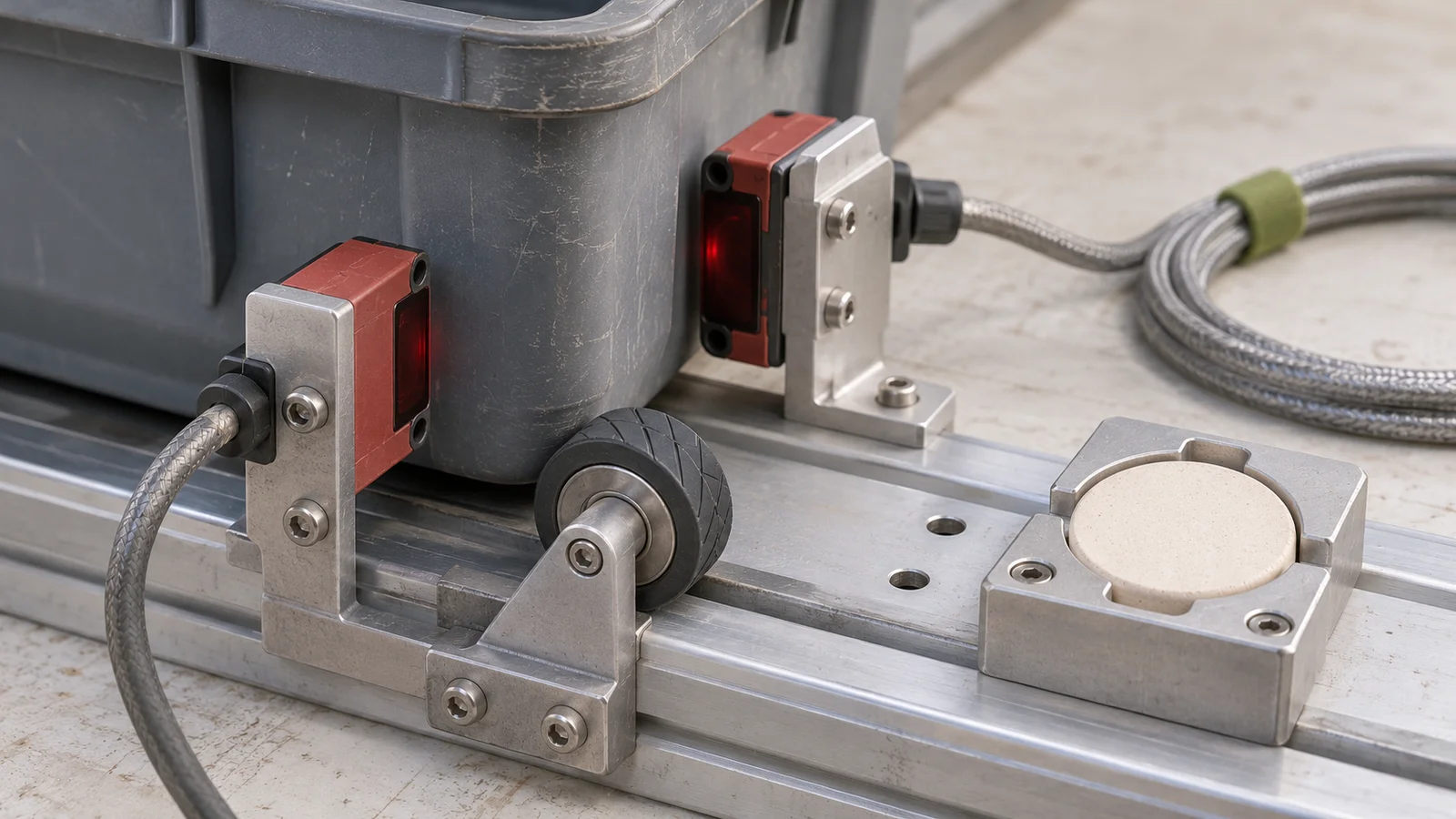
SAP's warehouse-robotics requirements note that some warehouse-order changes do not synchronize after retrieval and call for dedicated exception handling. Its robot-monitoring documentation separates source-bin, destination-bin, system and robot exceptions and requires affected exceptions to be solved before work continues. The general lesson is broader than robotics: recovery needs an explicit queue, owner and closure action.
Do not hide manual recovery
Physical operations will sometimes clear, relocate or inspect a load outside the normal automated path. Give that intervention a controlled workflow. Record who verified the load, where it is, which command is being resolved, whether inventory changed and what evidence permits the flow to resume.
Manual work is not a logging defect. Unrecorded manual work is.
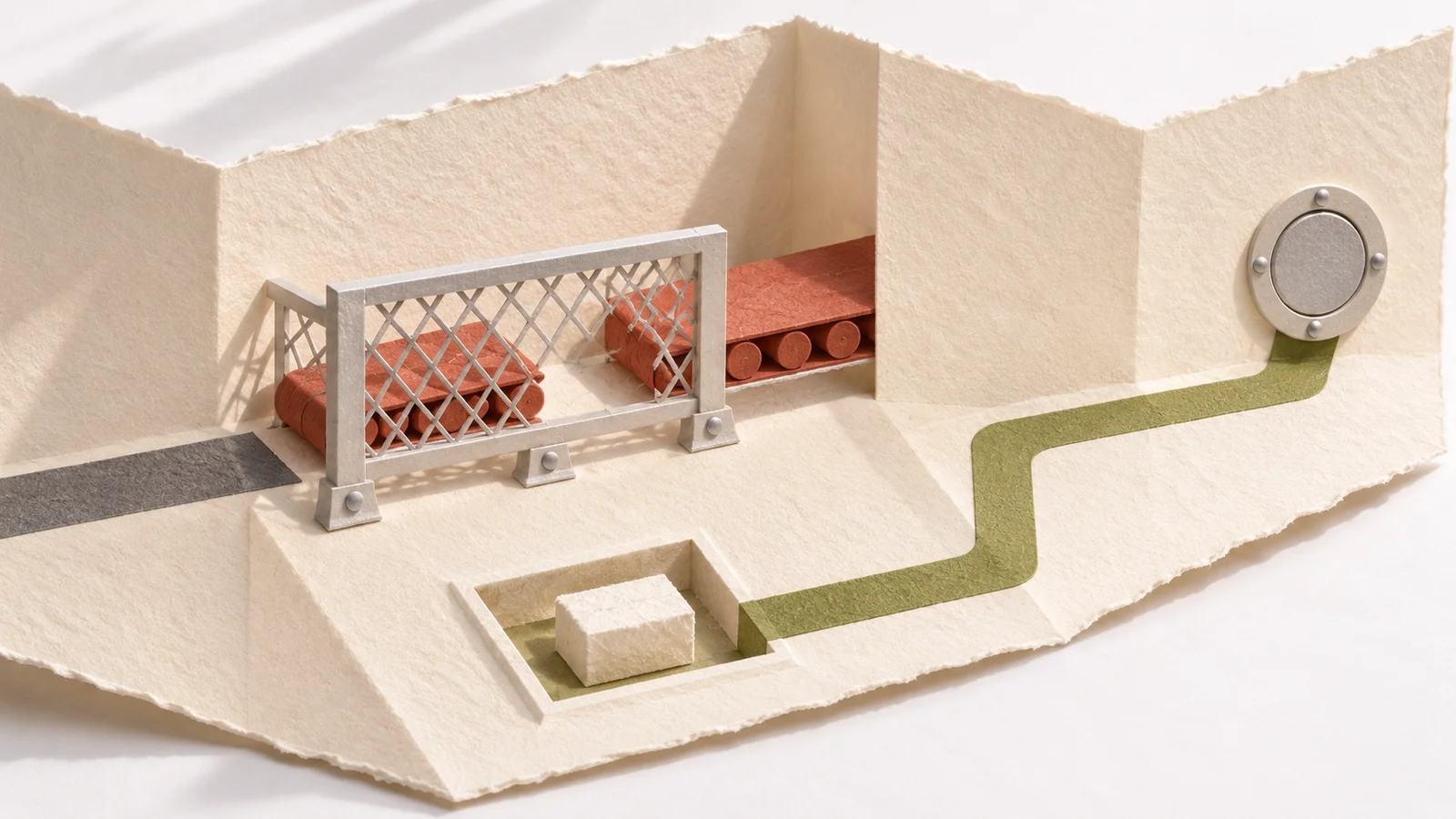
Keep safety and machine control outside business software
Warehouse automation introduces physical hazards that a message contract cannot control. OSHA's warehouse guidance addresses guarding, conveyor inspection, lockout/tagout, worker training and automation hazards. These controls require facility-specific procedures and qualified ownership.
Set hard boundaries:
- a host command never overrides an emergency stop, guard, interlock or energy-isolation state;
- a cleared software exception is not evidence that a physical hazard is cleared;
- maintenance and jam recovery follow approved procedures outside the integration workflow;
- equipment restart requires the approved control/safety sequence;
- software records only the status it is authorized to consume; and
- business priorities never bypass a safe operating boundary.
Choose configure, integrate or build
| Option | Choose it when | Watch for |
|---|---|---|
| Configure the WMS automation interface | the WMS provides the needed event, route, queue and confirmation model and one equipment domain is in scope | forcing equipment details into a business-work model; weak uncertainty lookup |
| Use the automation vendor's WCS/WES connector | the vendor owns the equipment behavior and offers a supported host contract | proprietary states, limited audit export, unclear multi-vendor ownership |
| Add a managed integration layer | several systems need governed mapping, observability, buffering and versioned contracts | turning middleware into a second command authority or shadow WMS |
| Build a narrow command/reconciliation service | the distinctive gap is replay safety, cross-vendor identity or recovery coordination not supported elsewhere | rebuilding real-time equipment control, safety logic or full warehouse execution |
The best boundary is often mixed. The WMS owns work and inventory policy. The WCS owns movement and equipment coordination. An integration service maps stable contracts and preserves evidence. Human operators own defined recovery decisions. Custom software should connect these responsibilities without absorbing all of them.
Ask vendors and integrators to demonstrate your failure conditions:
- duplicate and out-of-order commands;
- acceptance followed by host timeout;
- equipment completion followed by delayed confirmation;
- blocked or unavailable destination;
- sensor disagreement;
- manually moved load;
- command cancellation after equipment acceptance;
- equipment isolation and approved return to service;
- WMS, WCS and network outage at different points; and
- reconciliation of load, work, equipment and inventory after recovery.
For a scoped workflow and architecture review, see Technanosoft's logistics and field operations software capability. A credible estimate should start with the authority map, equipment interfaces, safety boundaries, exception ownership and acceptance tests—not a screen count.
Pilot one flow and accept reconciled state
Choose one bounded movement with stable load identity, known equipment ownership and enough exceptions to test recovery—for example, induction through one sorter zone to a confirmed destination. Avoid starting with every conveyor, robot, storage system and facility.
Stage 1: observe the physical process
Walk the route with operations, controls, safety, inventory and integration owners. Document where identity is read, what makes the load eligible, who chooses the route, which sensors support completion, how a jam is cleared and when inventory changes.
Stage 2: freeze the authority and contract
Approve owners, command states, identifiers, mappings, timestamps, expiry, replay behavior, error classes and manual actions. Test contract examples against real equipment states before connecting live commands.
Stage 3: shadow events
Consume or simulate commands and confirmations without directing production movement. Compare the proposed state model with actual zone transitions and operator recovery. Correct mappings and clocks.
Stage 4: enable bounded movement
Release one movement class and equipment zone. Keep rate limits, kill boundaries, rollback, local control and manual fallback explicit. Monitor unresolved and aging states rather than only completed counts.
Stage 5: exercise failure
Create approved tests for duplicate command, blocked destination, late confirmation, sensor disagreement, network interruption and manual relocation. Safety and controls owners must define how physical tests are performed; software teams should not improvise hazards.
Stage 6: accept the reconciled outcome
Accept the pilot when:
- every load has one durable identity across systems;
- accepted, started, completed and reconciled states are distinguishable;
- duplicates do not create duplicate physical movement or inventory updates;
- uncertain outcomes stop and reach the correct owner;
- manual recovery closes the original command and inventory discrepancy;
- events retain source and receive times;
- equipment isolation cannot be bypassed by business software;
- the current command, physical zone and WMS inventory can be reconciled; and
- rollback and support ownership are documented.
Do not call the pilot successful because messages flowed, a dashboard was green or average throughput increased. The acceptance result is controlled, explainable physical state under both normal flow and failure.
Common mistakes
| Mistake | Consequence | Better approach |
|---|---|---|
| treating queue delivery as completion | inventory advances before the load moves | separate received, accepted, physical and reconciled states |
| allowing two command authorities | equipment receives conflicting routes | assign one writer for each equipment zone and movement class |
| retrying every timeout | one load or inventory update can happen twice | reconcile by stable identity before replay |
| embedding safety reset in host workflow | software state can be mistaken for safe physical state | keep approved safety/control authority separate |
| mapping unknown exceptions to success | physical discrepancy disappears from operations | reject, quarantine and assign an accountable owner |
| ignoring manual moves | host and floor diverge after recovery | provide an authorized reconciliation workflow |
| building a universal automation platform | scope expands into PLC, WCS, WES and WMS responsibilities | build only the missing contract or recovery capability |
Frequently asked questions
What is warehouse control system integration?
It is the connection between warehouse work or inventory systems and the software that coordinates automated material-handling equipment. A reliable integration translates business work into controlled movement and returns enough evidence to reconcile physical and inventory state.
What is the difference between WMS and WCS?
A WMS usually owns inventory, warehouse work and business rules. A WCS usually coordinates real-time movement across conveyors, sorters, automated storage or other equipment. Products overlap, so assign authority from the actual platforms rather than relying on acronyms.
Where does a WES fit?
A warehouse execution system may orchestrate work and resources between WMS planning and equipment control. If a WES is present, define whether it only prioritizes work or also becomes the movement-command authority. Do not leave WMS, WES and WCS all able to command the same zone.
Should the integration use APIs or queues?
Choose transport after defining state and recovery. Queues can buffer and decouple systems; APIs can provide direct command or lookup patterns. Either can fail operationally if command identity, acknowledgements, ordering, replay and reconciliation are unclear.
How should duplicate messages be handled?
Use a stable command identity and make repeated processing return the known outcome or a controlled rejection. A duplicate must not create a second movement or inventory transaction. If the first result is uncertain, reconcile physical and host state before retrying.
What should be custom?
Custom work is most defensible where stable cross-vendor identity, governed mapping, uncertainty lookup or reconciliation is missing. Real-time equipment control, safety logic, mature WMS work creation and vendor-supported device behavior generally belong in their established systems.
One-minute decision summary
- Define success as one reconciled chain from business intent to physical and inventory outcome.
- Assign business, command, physical, inventory and safety authority.
- Give every command stable identity, expected state, version, expiry and replay behavior.
- Separate received, accepted, started, completed, reconciled and uncertain states.
- Design jam, block, duplicate, delay, outage and manual-move recovery before release.
- Keep safety and machine restart outside business software.
- Choose configure, connector, integration layer or narrow custom service from the remaining gap.
- Accept the pilot only when normal and failed movements reconcile.
The right warehouse control system integration is not the one with the most live arrows on a screen. It is the one that can stop at uncertainty, identify the real load and command, preserve approved physical boundaries, and return the warehouse to one explainable state.