Technanosoft Insights
Freight Claims Automation: Evidence, Filing, and Control
A controls-first guide to preserving freight-claim evidence, filing with authority, tracking carrier responses, and reconciling the outcome.
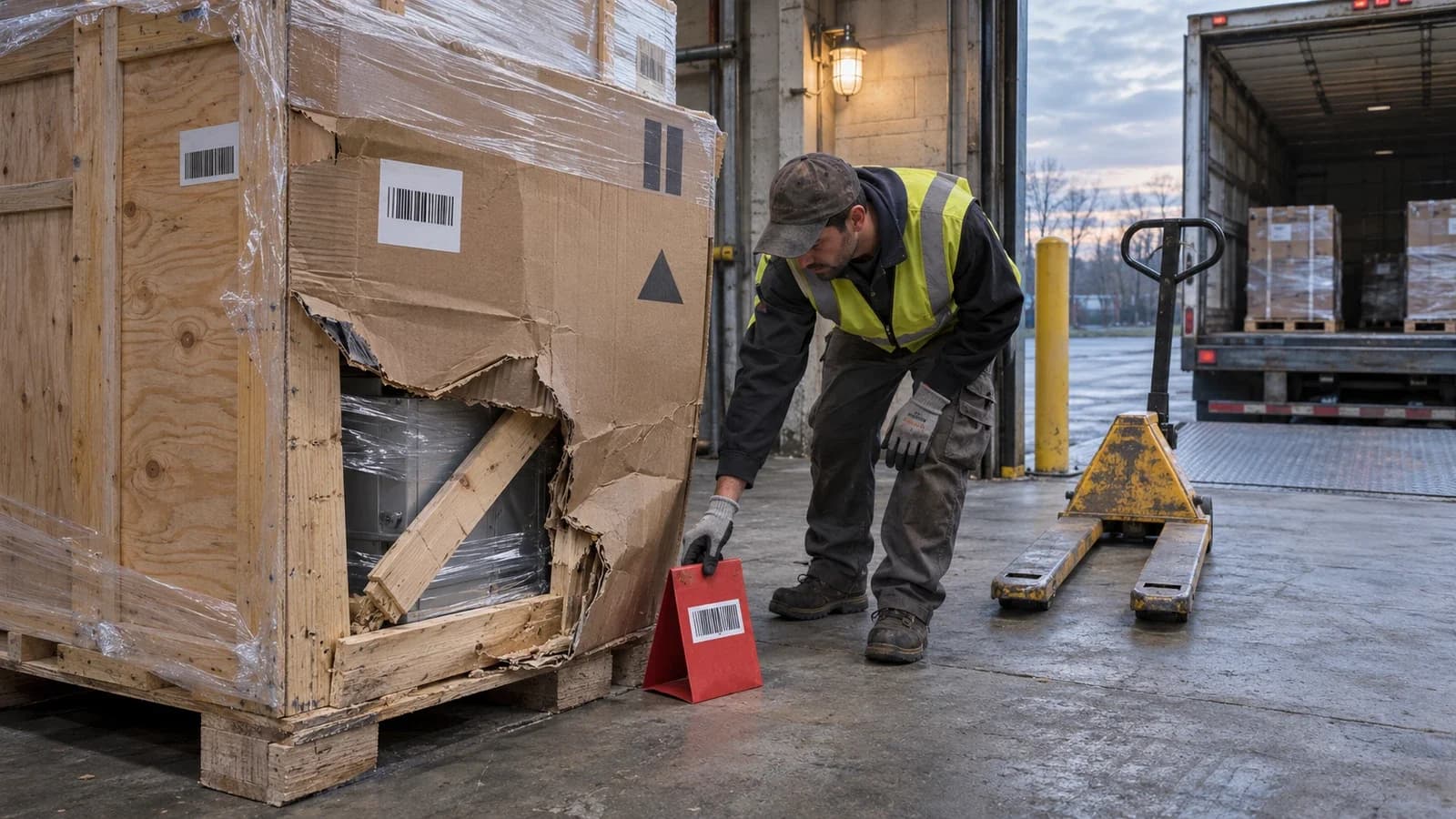
A controls-first guide to preserving freight-claim evidence, filing with authority, tracking carrier responses, and reconciling the outcome.
Freight claims automation should make a claim easier to prove, file, track, and reconcile without pretending that a damage photo or a sent email is the claim itself. The practical goal is a governed case record that connects the shipment, incident, contract, evidence, asserted liability, requested amount, carrier correspondence, authorized decisions, and final financial outcome.
That distinction matters because freight loss and damage work crosses receiving, transportation, customer service, finance, legal, and carrier operations. One team may photograph the damage, another may own the bill of lading, a third may calculate the amount, and a fourth may communicate with the carrier. If those facts live in separate inboxes and spreadsheets, deadlines and evidence can disappear between handoffs.
Quick answer
Start with one claim type and define a Claim Control Record before choosing software. Specify which event creates an incident, which evidence must be preserved, who is entitled to file, what makes the filing sufficient, which terms and clocks apply, who may change the claimed amount, how carrier responses are classified, and what proves settlement or recovery.
Automate collection, matching, completeness checks, reminders, packet assembly, correspondence capture, and status reporting first. Keep liability assertions, material amounts, settlement acceptance, releases, and write-offs with named human owners. Buy when a maintained claims product fits the workflow. Integrate when the TMS, document store, email, and accounting systems are sound but disconnected. Build only where the evidence rules, partner workflow, or controls are genuinely distinctive.
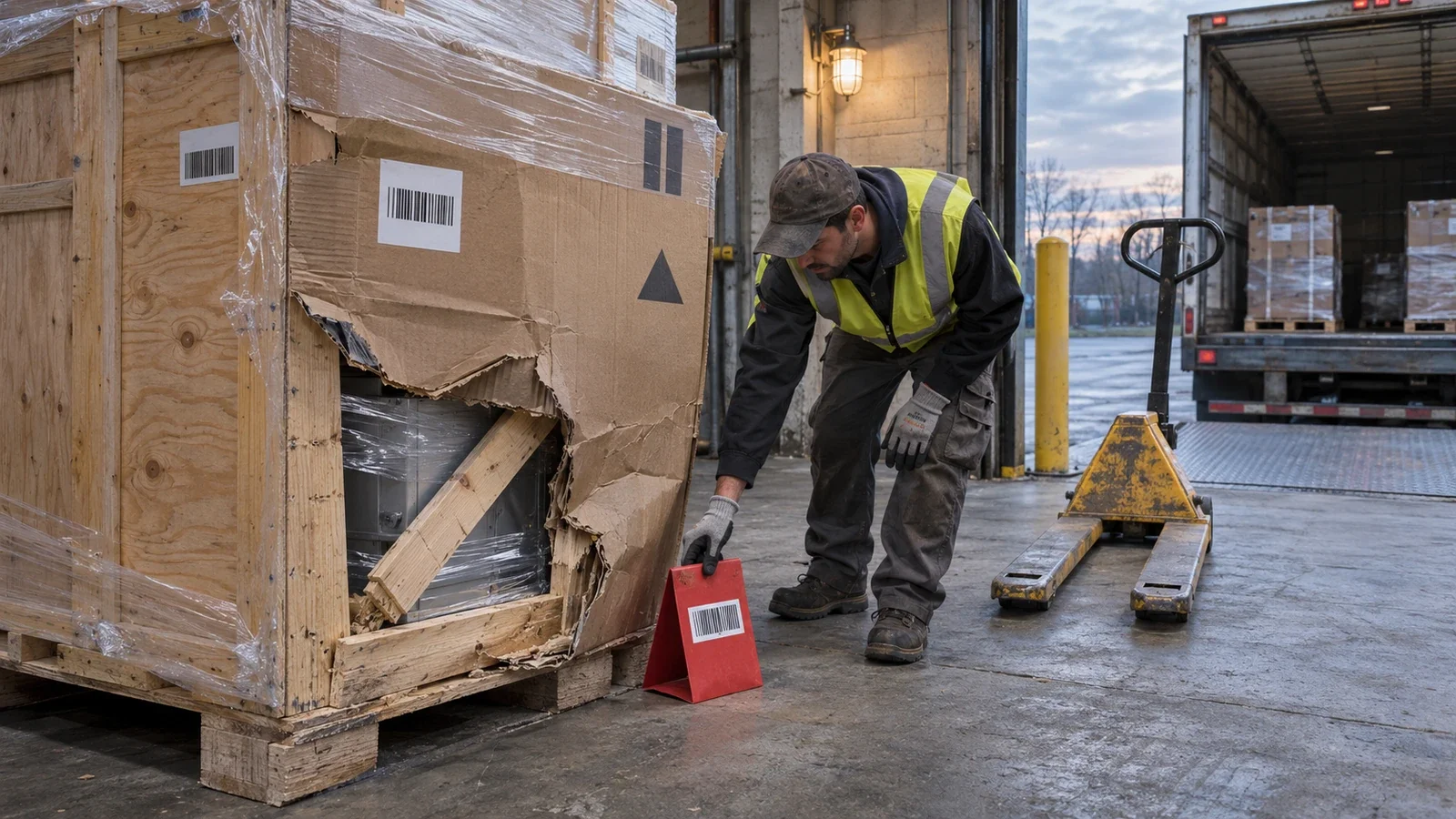
What freight claims automation actually includes
Freight claims automation is a workflow around cargo loss, shortage, damage, or delay. Depending on the shipment, mode, contract, tariff, and operating role, the system may coordinate:
- incident capture at pickup, transfer, or delivery;
- shipment, carrier, consignee, and contract matching;
- preservation of packaging, seal, condition, and location evidence;
- bills of lading, delivery receipts, packing lists, invoices, and inspection material;
- calculation and review of a specified or determinable claimed amount;
- filing with the appropriate carrier or other party;
- acknowledgment and information-request tracking;
- investigation notes and supplemental evidence;
- settlement, denial, appeal, or closure decisions; and
- payment, credit, salvage, write-off, and accounting reconciliation.
Those steps are related, but they are not interchangeable. A receiving note can establish that something looked wrong. A filed claim must meet the applicable requirements. An acknowledgment proves receipt, not acceptance. A settlement offer is not payment. A closed task is not a reconciled outcome.
For US interstate freight within the scope of 49 CFR Part 370, section 370.3 describes minimum filing requirements that include facts sufficient to identify the shipment, an assertion of liability, and a claim for a specified or determinable amount. It also says a damage notation, appraisal, or inspection report alone is not necessarily enough. The system should preserve these facts as separate fields and evidence, not infer that any one document completes the filing.
This is operational guidance, not legal advice. Filing windows, liability, documentation, and dispute procedures can change by mode, contract, bill of lading, tariff, carrier terms, jurisdiction, and facts. Configure the workflow from approved terms for the specific business—not from a generic internet checklist.
The first decision is whether to stop the freight
The most important automation event may occur before anyone creates a claim. When loss, shortage, or damage is discovered, the receiving workflow should help the team preserve condition and identity before normal handling destroys useful evidence.
An incident playbook can require the receiver to:
- stop or isolate further movement when safe and permitted;
- record the shipment, handling unit, location, date, and receiving context;
- preserve relevant packaging, seals, labels, and damaged goods;
- document overall condition, shipment identity, and close damage detail;
- record visible shortage or damage on the delivery record when appropriate;
- notify the named internal owner; and
- retain the evidence under the correct shipment and claim candidate.
UPS Supply Chain Solutions' cargo-claims guidance illustrates the kind of materials a carrier may request: bills of lading, commercial invoices, packing lists, signed delivery documents, inspection reports, photographs, and repair estimates. Its terms still control the specific claim. The design lesson is that a platform should support configurable evidence requirements rather than one universal packet.
Define a Claim Control Record
The Claim Control Record is the durable case file for one claim candidate and any resulting filing. It should answer eight questions.
1. Which shipment and handling event are involved?
Use stable references from the TMS, WMS, ERP, carrier record, bill of lading, tracking event, or delivery receipt. Preserve aliases without letting them create duplicate claims. A photograph that cannot be tied to the correct shipment and event is much less useful.
2. Who owns the goods and who may file?
Record the claimant role, entitlement or authority, carrier, broker or forwarder role, and any assignment or customer instruction. FMCSA states that a broker is not required to process a cargo loss or damage claim, though it may assist a shipper; a claim is filed with the appropriate motor carrier. The workflow should therefore route by actual role and contract, not assume that the party coordinating the load owns the claim.
3. What incident is alleged?
Use specific categories such as shortage, visible damage, concealed damage, loss, delay, contamination, seal issue, or overage. Retain when and where the condition was observed, who observed it, and whether the freight moved afterward. Avoid a single free-text “problem” field.
4. What makes the filing sufficient?
For a covered Part 370 claim, the minimum filing elements described in section 370.3 should remain explicit: shipment identification, asserted liability, and a specified or determinable amount. Other terms may require more. The system should distinguish `INCIDENT_RECORDED`, `PACKET_INCOMPLETE`, `READY_FOR_REVIEW`, and `FILED` rather than showing all four as “open.”
5. Which evidence supports the amount and condition?
Link each item to its source and purpose: transport document, freight charges, commercial invoice, value evidence, packing list, delivery record, photos, inspection report, repair estimate, salvage record, correspondence, or customer credit. Keep versions and received dates. Do not silently replace a file after it informed a decision.
6. Which terms and clocks apply?
Store the source of the rule—contract, bill of lading, tariff, carrier terms, statute, regulation, or approved policy—plus the triggering event and calculated due date. Do not hard-code one filing deadline for every shipment. When terms conflict or are missing, create an owned exception.
7. Who may decide?
Map authority for filing, changing the amount, accepting a settlement, rejecting an offer, signing a release, issuing a customer credit, abandoning recovery, or writing off a balance. A preparer may assemble the packet without having authority to make those decisions.
8. What proves the outcome?
Closure should require a reason and evidence: paid and reconciled, credit received, settlement accepted and posted, denied with decision retained, withdrawn with authorization, transferred, litigated outside the workflow, or written off under policy. “Carrier replied” is not an outcome.
Capture evidence as an activity, not an upload box

A generic attachment button invites incomplete packets. Design the capture flow around the decision the evidence must support.
For a damage incident, the receiver may need an overall view, shipment or handling-unit identity, packaging condition, close damage detail, and a scale reference. For a shortage, the team may need piece counts, packing information, delivery notation, seal condition, and handling records. For a value claim, the examiner may need invoices, repair or replacement evidence, depreciation or salvage treatment, and transportation charges.
The interface can guide capture without generating a fictional record. Use required shot types, checklists, timestamps, source identifiers, and private metadata. Avoid embedding customer names or amounts into generated training material. Use synthetic or approved redacted examples in testing.
Build states around evidence and responsibility
A useful state model tells the team what happened and who acts next. One possible starting set is:
| State | Meaning | Next owner |
|---|---|---|
| `INCIDENT_RECORDED` | Condition was observed; no filing claim is implied | Receiving / operations |
| `EVIDENCE_HOLD` | Freight, packaging, or records must be preserved | Operations |
| `PACKET_INCOMPLETE` | Required facts or documents are missing | Claims preparer |
| `AUTHORITY_REVIEW` | Filing role or entitlement is unclear | Claims lead / legal |
| `AMOUNT_REVIEW` | Claimed amount needs approval or support | Finance / claims lead |
| `READY_TO_FILE` | Approved packet meets configured requirements | Authorized filer |
| `FILED_UNACKNOWLEDGED` | Filing was sent; receipt is not yet confirmed | Claims owner |
| `ACKNOWLEDGED` | Carrier confirmed receipt or assigned a reference | Claims owner |
| `MORE_INFORMATION` | Carrier requested additional material | Evidence owner |
| `OFFER_REVIEW` | A settlement or compromise requires authority | Authorized decision maker |
| `DENIED_REVIEW` | Denial needs accept, appeal, or escalation decision | Claims lead |
| `PAID_UNRECONCILED` | Payment or credit appears but accounting is incomplete | Finance |
| `CLOSED` | Outcome and supporting record are complete | System after checks |
49 CFR 370.5 requires acknowledgment of a proper claim within 30 days unless it has been paid or declined within that period, and it describes a separate claim file and claim number. That does not mean every workflow should use a universal 30-day reminder without legal review. It does mean the system should preserve received dates, acknowledgments, carrier references, and requested supplemental evidence as structured events.
What to automate first
Choose tasks that are frequent, rules-based, observable, and reversible:
- create an incident record from an approved receiving, TMS, or customer-service event;
- match the shipment, parties, transport documents, and delivery event;
- request specific missing evidence from named owners;
- classify documents and extract candidate identifiers for review;
- detect duplicate claims, conflicting shipment references, and stale evidence;
- calculate configurable due dates from approved terms and trigger events;
- assemble a review-ready packet with a completeness report;
- send an approved filing through a controlled channel;
- capture acknowledgments and carrier reference numbers from email or portals;
- route information requests, offers, denials, and aging items; and
- reconcile approved recoveries, credits, salvage, and write-offs to accounting.
AI can help classify inbound correspondence, extract candidate fields, summarize a long thread, compare a packet with a checklist, or draft a response. Rules are better for required fields, date arithmetic, role permissions, duplicate prevention, allowed transitions, and approval thresholds. Neither AI confidence nor a successful API call should become settlement authority.
Keep one evidence chain

The system does not need to copy every source file into one database. It does need stable links and a reliable history. A practical architecture usually includes:
- a claim record with shipment, party, incident, amount, authority, and state;
- evidence records with source, purpose, version, checksum or stable reference, and retention rule;
- deadline records with rule source, trigger, calculation, override, and owner;
- action records for filing, requests, approvals, offers, decisions, and accounting events;
- correspondence records connected to the carrier reference and internal owner; and
- integration receipts that distinguish request sent, accepted, rejected, timed out, and outcome unknown.
Do not automatically replay an uncertain filing or portal action. First determine whether the external party created a claim or reference. Stable request identifiers, saved payloads, and reconciled responses reduce duplicate submissions where the destination supports them.
Buy, integrate, or build?
Buy a claims product when
- the product supports the relevant modes, roles, terms, and evidence types;
- configuration covers the approval and deadline rules;
- exports and audit history are adequate;
- security, retention, support, and integration terms are acceptable; and
- the operating team can adopt the standard workflow.
Integrate existing systems when
- the TMS, WMS, document store, email, and accounting tools are trusted;
- the main problem is duplicate entry and broken handoffs;
- claims volume does not justify replacing core systems; and
- a coordination layer can own states, evidence links, and approvals.
Build a focused workflow when
- claim rules vary materially by customer, mode, carrier, commodity, or contract;
- partner portals and correspondence create distinctive exception work;
- the organization needs controlled multi-party collaboration;
- existing products cannot preserve the required authority or audit boundary; or
- claims are part of a larger customer, quality, or finance workflow.
Do not custom-build merely to reproduce a standard dashboard. Distinctive rules and integrations should justify the ownership cost.
Pilot one claim type
Choose a representative but bounded cohort: for example, visible damage on one mode and one carrier group. Use synthetic or approved redacted records in early testing.
Baseline:
- incidents discovered;
- time from discovery to preserved evidence;
- packets returned for missing information;
- time to authorized filing;
- filings without confirmed receipt;
- carrier information requests;
- duplicate records;
- days in each state; and
- paid or credited outcomes waiting for reconciliation.
Measure process quality, not only money recovered. Recovery depends on facts, contracts, liability, and documentation. A good pilot can reduce lost evidence and unclear ownership even when claim outcomes vary.
Test failure paths: wrong shipment match, duplicate incident, missing authority, conflicting contract terms, expired credentials, portal timeout, acknowledgment without reference, changed amount after approval, partial payment, denial, reopened claim, and payment without accounting match.
How Technanosoft can help
Technanosoft's AI workflow automation service begins with workflow discovery, data and tool mapping, architecture, validation, human approvals, and monitoring. Its logistics and field operations work includes dispatch, field, route, reporting, and integration workflows.
For a freight-claims project, that can mean mapping the incident-to-reconciliation process, defining the Claim Control Record, connecting approved TMS/WMS/email/accounting systems, building evidence and exception workflows, and testing recovery before broader rollout.
The first question is not “Which AI should approve claims?” It is “Which facts, documents, decisions, clocks, and outcomes must stay connected for one claim type?”
Frequently asked questions
Is a delivery receipt notation the same as a freight claim?
No. It can be important incident evidence, but 49 CFR 370.3 says damage or shortage notations and inspection reports alone do not necessarily satisfy the minimum filing requirements for covered claims. Apply the relevant contract, carrier terms, mode, and legal requirements.
Can AI file freight claims automatically?
AI can prepare fields, classify documents, find missing evidence, and draft correspondence. Filing should occur only under an approved workflow with confirmed authority, amount, destination, and terms. Material changes after approval should return to review.
What is the smallest useful first release?
An incident record, shipment match, configurable evidence checklist, named owners, filing review, deadline tracking, correspondence capture, and outcome reconciliation for one claim type. Portal automation and AI can follow after the control record is reliable.
Should a broker own the claim workflow?
That depends on the contract and role. FMCSA says brokers are not required to process loss and damage claims, though they may assist shippers. Configure ownership and filing authority from the actual relationship.
How should we compare freight-claims software?
Test the real workflow: supported modes and parties, evidence configuration, deadline sources, duplicate control, approval binding, correspondence capture, carrier portals, audit history, accounting reconciliation, exports, retention, security, and recovery from uncertain external actions.
How do we estimate value without inventing recovery claims?
Measure current touch time, missing-evidence rework, aging, duplicate effort, unconfirmed filings, carrier follow-ups, and unreconciled outcomes. Model value from your own volume and loaded labor cost. Keep recovery assumptions separate and visible.
One-minute decision
Choose freight claims automation when evidence is scattered, ownership is unclear, filings are hard to prove, carrier responses disappear into inboxes, or recoveries remain unreconciled. Start with one claim type. Define the control record, terms, evidence, authority, clocks, and closure proof before automating actions.
Buy when a maintained platform fits. Integrate when reliable systems are disconnected. Build only when the workflow or control boundary is meaningfully distinctive.
The objective is not to make every claim look successful. It is to make every claim state explainable, owned, and supported by the record.