AI, ML, data workflows, and intelligent product features

AI & Machine Learning Development for Practical Business Software

Technanosoft helps businesses turn operational data, documents, support conversations, product behavior, and reporting gaps into useful AI and machine learning features inside real software.

What We Build With AI and ML

We focus on practical features that improve decisions, reduce repetitive review work, and make existing software more intelligent without adding unnecessary complexity.

Predictive dashboards

Forecast demand, revenue, workload, churn risk, ticket volume, inventory needs, or operational performance using the data your team already collects.

Document intelligence

Extract, classify, validate, and route invoices, forms, reports, IDs, contracts, applications, and other business documents.

Recommendation engines

Add product suggestions, next-best actions, personalized content, lead prioritization, or workflow recommendations to customer and internal platforms.

Classification and scoring

Sort messages, detect intent, score leads, flag anomalies, route support requests, and organize records with review-friendly AI logic.

Computer vision features

Build image review, quality checks, document image processing, object detection, and visual workflow support for industry-specific use cases.

AI reporting assistants

Turn scattered business data into summary views, natural-language insights, alerts, and dashboards that teams can actually act on.

How We Make AI Useful Inside Your Software

The model is only one part of the system. We connect AI output to dashboards, permissions, review states, APIs, alerts, approvals, and business workflows so teams can trust and use the result.
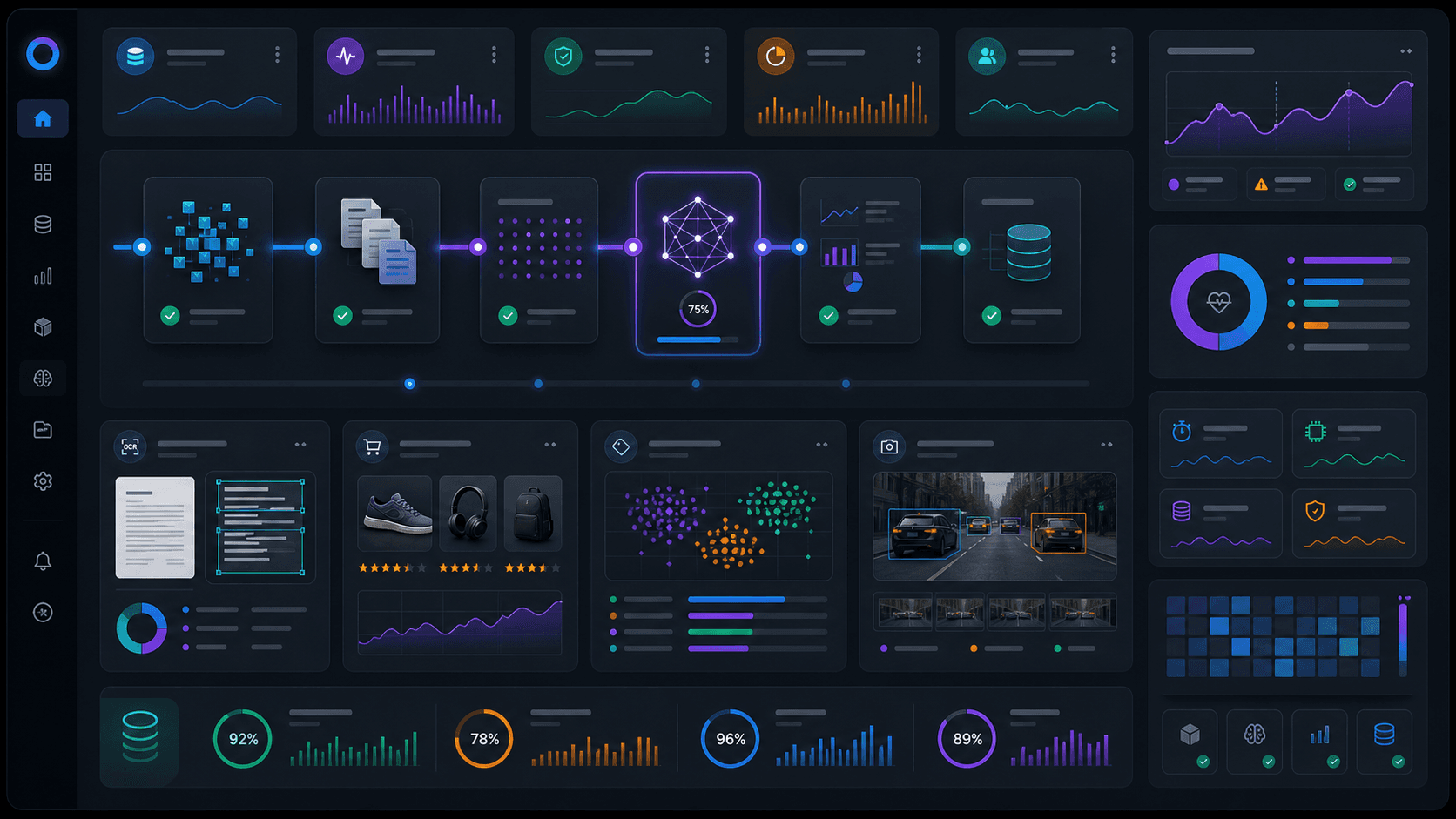
Machine learning workflow dashboard with OCR, classification, recommendations, computer vision, and model quality panels

Computer vision and document workflows

Image processing, OCR, classification, and review screens designed around real business operations.

AI reporting dashboard with predictive charts, anomaly cards, model monitoring, and business intelligence widgets

AI reporting and analytics

Dashboards that explain patterns, highlight exceptions, and keep human teams in control.

AI/ML Delivery Principles

  • Start with business value, data readiness, and measurable workflow improvement.
  • Choose the right approach: rules, classic ML, LLM APIs, computer vision, vector search, or a hybrid system.
  • Build review states, confidence thresholds, fallback paths, and human approval for sensitive decisions.
  • Keep access control, data boundaries, audit logs, and privacy requirements visible from the architecture stage.
  • Monitor model quality, usage cost, latency, errors, and feedback after launch.
  • Avoid unsupported claims and use exact performance numbers only when they are measured and documented.

Common AI/ML Use Cases

  • Invoice extraction and finance workflow automation
  • Customer support intent detection and response assistance
  • Lead scoring, sales prioritization, and outreach analytics
  • Healthcare appointment, patient, and clinic reporting intelligence
  • Inventory forecasting, demand planning, and operations dashboards
  • Content moderation, sentiment analysis, and feedback classification
  • Product search, semantic matching, and recommendation features
  • Image review, document image cleanup, and quality inspection workflows

AI/ML Development Process

We move from feasibility to production with clear checkpoints, measurable acceptance criteria, and a software-first delivery approach.

  1. Use-case discovery
  2. Data readiness review
  3. Prototype
  4. Model/API selection
  5. Software integration
  6. Evaluation
  7. Launch
  8. Monitoring

Relevant AI Software Examples

Examples of AI-enabled platforms, dashboards, and workflow systems shaped around practical business operations.

3D head imaging medical software interface with healthcare AI image processing workflow

Medical Imaging / Healthcare AI

3D Head Imaging Platform for Openwater USA

Problem
Openwater needed a medical software experience that could present complex 3D head imaging workflows in a clear, reviewable, and clinically useful interface.
What we built
A 3D head imaging software workflow for medical visualization, image processing, structured review, and healthcare data interpretation.
Result
The product direction made advanced medical imaging easier to review, explain, and extend through a structured software experience.
Core features
3D medical imagingImage processing workflowHealthcare dashboardScan review interfaceClinical data visualization
Tech stack
Medical imaging softwareComputer visionImage processingCloud backendSecure healthcare workflows
Read Case Study
AI OCR QuickBooks app integration with invoice extraction accounting automation and review workflow

AI OCR / Accounting Automation

AI OCR System App with QuickBooks Platform Integration

Problem
Finance teams needed an AI OCR app that could extract accounting data from documents and connect the workflow with QuickBooks for faster review and posting.
What we built
An AI OCR system app with QuickBooks integration, document extraction, accounting data review, error handling, and publication-ready platform workflow.
Result
The app was shaped for QuickBooks-connected accounting automation and platform publication, supporting a more efficient finance document workflow.
Core features
AI OCR extractionQuickBooks integrationInvoice data captureAccounting review queuePlatform app workflow
Tech stack
AI OCRQuickBooks APIDocument intelligenceNode.jsCloud backend
Read Case Study
Biometric authentication system with face recognition secure login and enterprise access control

Biometric Security / Enterprise Authentication

Biometric Authentication System for OICL Limited India

Problem
OICL Limited India needed a secure authentication workflow that could improve identity verification and reduce friction in controlled enterprise access.
What we built
A biometric authentication system with identity verification, secure login workflows, user management, audit visibility, and authentication controls.
Result
The authentication workflow strengthened identity checks and gave administrators a clearer way to manage secure access.
Core features
Biometric loginIdentity verificationSecure access controlAudit workflowUser management
Tech stack
Biometric authenticationFace recognitionSecure APIsEnterprise dashboardAccess control
Read Case Study

Technology Stack

Technology choices depend on the workflow, architecture, security, and long-term support needs.

OpenAI APIsPythonTensorFlowPyTorchscikit-learnPandasVector SearchPostgreSQLNext.jsNode.jsAWSDocker

FAQ

Do we need perfect data before starting?

No. We can begin with a data and feasibility review to understand quality, gaps, risks, and realistic use cases before building the feature.

Can ML features be added to existing software?

Yes. Predictive dashboards, OCR, recommendations, classification, sentiment analysis, and AI reporting can often be integrated into existing products.

Do you train custom models or use AI APIs?

We recommend the approach that fits the use case, data, budget, timeline, privacy needs, and support plan. That may be an AI API, classic ML, vector search, computer vision, or a custom model.

Do you build dashboards for AI results?

Yes. Dashboards, review screens, alerts, approvals, and workflow integration are often the most important part of making AI/ML useful.

Have data, documents, or manual decisions slowing the team down?

Tell us the workflow you want to improve. We will help identify the right AI/ML direction, technical roadmap, and first buildable version.

Discuss Your AI/ML Project