Technanosoft Insights
Proof of Delivery Automation: Workflow and Build-vs-Buy Guide
A controls-first guide to proof of delivery capture, offline synchronization, validation, exceptions, TMS and billing integrations, and the buy-versus-build decision.
A controls-first guide to proof of delivery capture, offline synchronization, validation, exceptions, TMS and billing integrations, and the buy-versus-build decision.
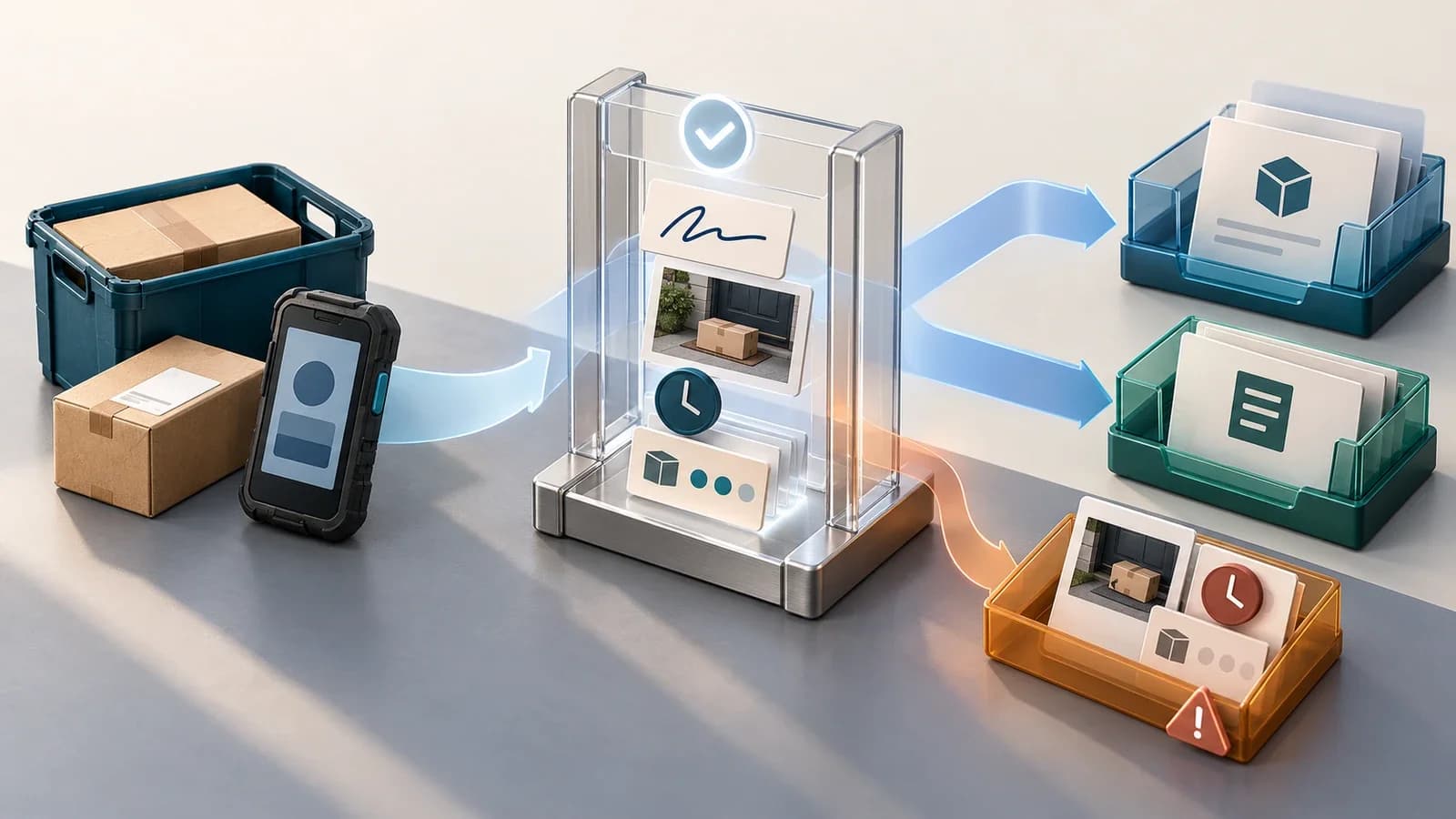
Proof of delivery automation turns signatures, photos, timestamps, reason codes, and delivery notes into a controlled shipment record that can trigger the right billing, customer-service, claims, or exception workflow. The hard part is not capturing a signature; it is preserving reliable evidence when devices are offline, records arrive twice, or a delivery is incomplete or disputed.
Editorial status: Draft for internal review · Estimated reading time: 16 minutes
Quick answer
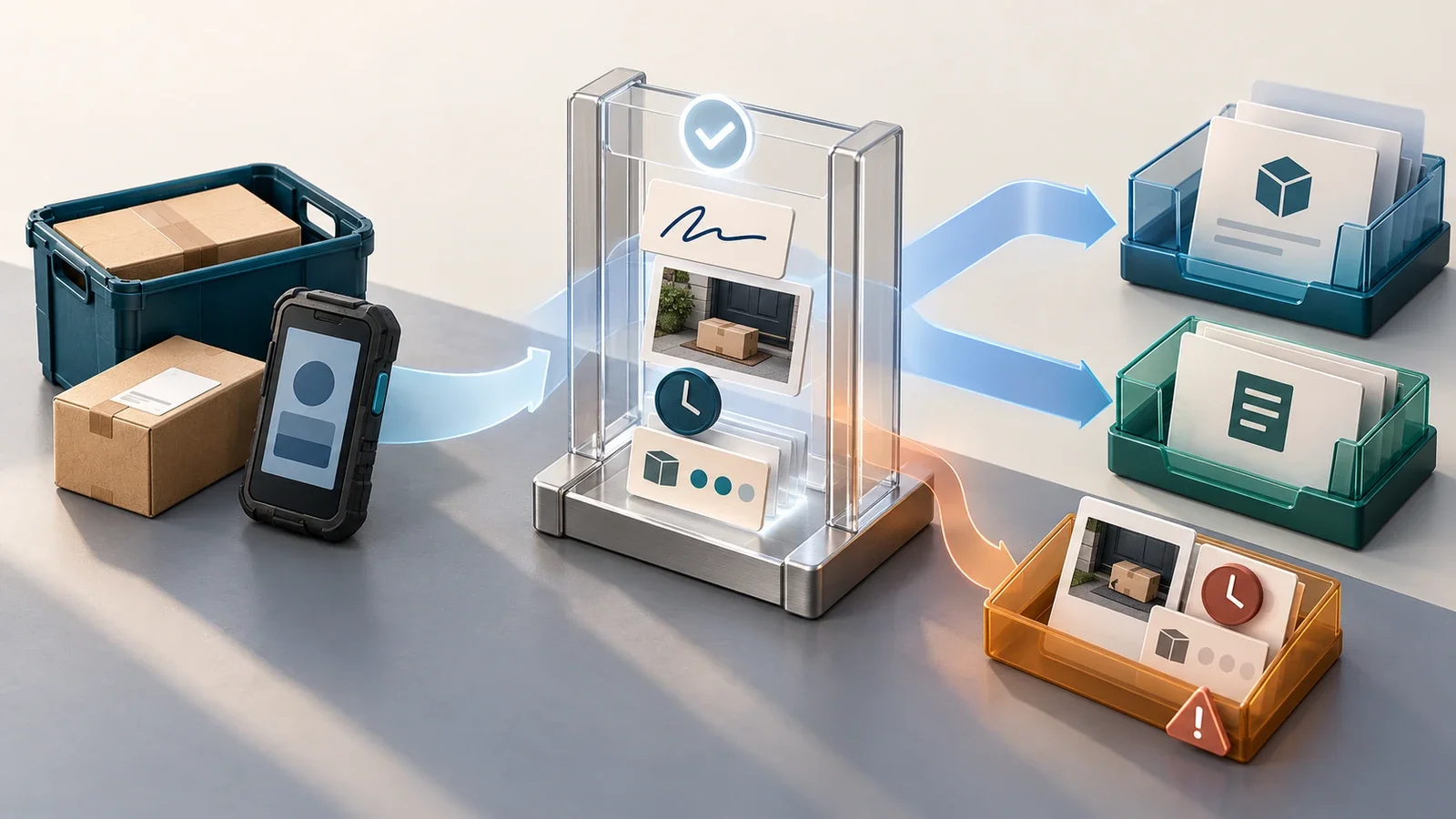
Proof of delivery automation should capture evidence at the stop, validate required fields, link the event to the correct shipment, and update downstream systems only after the delivery outcome is clear. A reliable design also works through weak connectivity, rejects or merges duplicate events, holds incomplete evidence for review, and records who changed what. Buy or configure an existing product when the workflow is standard. Extend or build only when your roles, integrations, exception rules, or customer experience are genuinely different.
Key takeaways
| Decision point | Practical answer |
|---|---|
| What is the real unit of automation? | A validated delivery event linked to a shipment—not an image file alone |
| What belongs in the first release? | Required evidence, offline-safe capture, validation, shipment matching, exception queue, and one downstream integration |
| Where should people remain involved? | Damages, shortages, refusals, identity ambiguity, disputed timestamps, or policy overrides |
| When is AI useful? | Reading varied documents or notes and preparing a classification for review; deterministic rules should enforce required fields and authority |
| When should you avoid custom development? | When a maintained TMS, driver app, or ePOD product already supports the workflow and integrations with acceptable configuration |
On this page
- Who this guide is for
- What proof of delivery automation includes
- What to automate first
- The POD Control Loop
- Architecture and failure handling
- Scope, effort, and value
- Use cases and alternatives
- Choose it when / avoid it when
- Risks and controls
- How to select a provider
- How Technanosoft approaches POD automation
- FAQs
- The decision in one minute
Who this guide is for
This guide is for a logistics or field-operations leader whose team cannot reliably move from “the stop is complete” to “the evidence is usable.” Typical symptoms include POD photos in shared inboxes, signatures detached from shipment records, billing held while someone chases a driver, or customer-service staff searching several systems during a dispute.
It is not a legal opinion on what constitutes proof in a particular contract, state, industry, or country. Your contracts, customer rules, retention policy, and qualified legal or compliance review determine the evidence you must collect and keep.
What proof of delivery automation includes
Electronic proof of delivery (ePOD) is the digital record created when a delivery attempt or completion is documented. Depending on the operation, that record may contain a signature, recipient name, timestamp, photo, location signal, delivered quantities, condition, reason code, driver note, or customer confirmation.
Automation begins after capture design is clear. It checks that required evidence is present, connects the evidence to the correct order or shipment, assigns an outcome, and routes the result. Oracle Transportation Management, for example, documents proof of delivery as a document associated with a shipment and supports revision and review states. That illustrates why a POD should live with the business record it supports, not as an orphaned file in a folder. Oracle Transportation Management documentation
The business problem behind the feature
| Current problem | Operational impact | Possible software response |
|---|---|---|
| Driver uploads a photo without a shipment link | Operations must identify and attach it manually | Bind capture to the assigned stop and shipment ID |
| Required signature or quantity is missing | Billing or customer confirmation may be premature | Apply required-field and outcome-specific validation |
| A weak network interrupts upload | Driver repeats the action or evidence arrives late | Save locally, show sync state, and retry safely |
| The same event is delivered twice | Duplicate status changes, notices, or billing triggers | Use a stable event key and idempotent consumers |
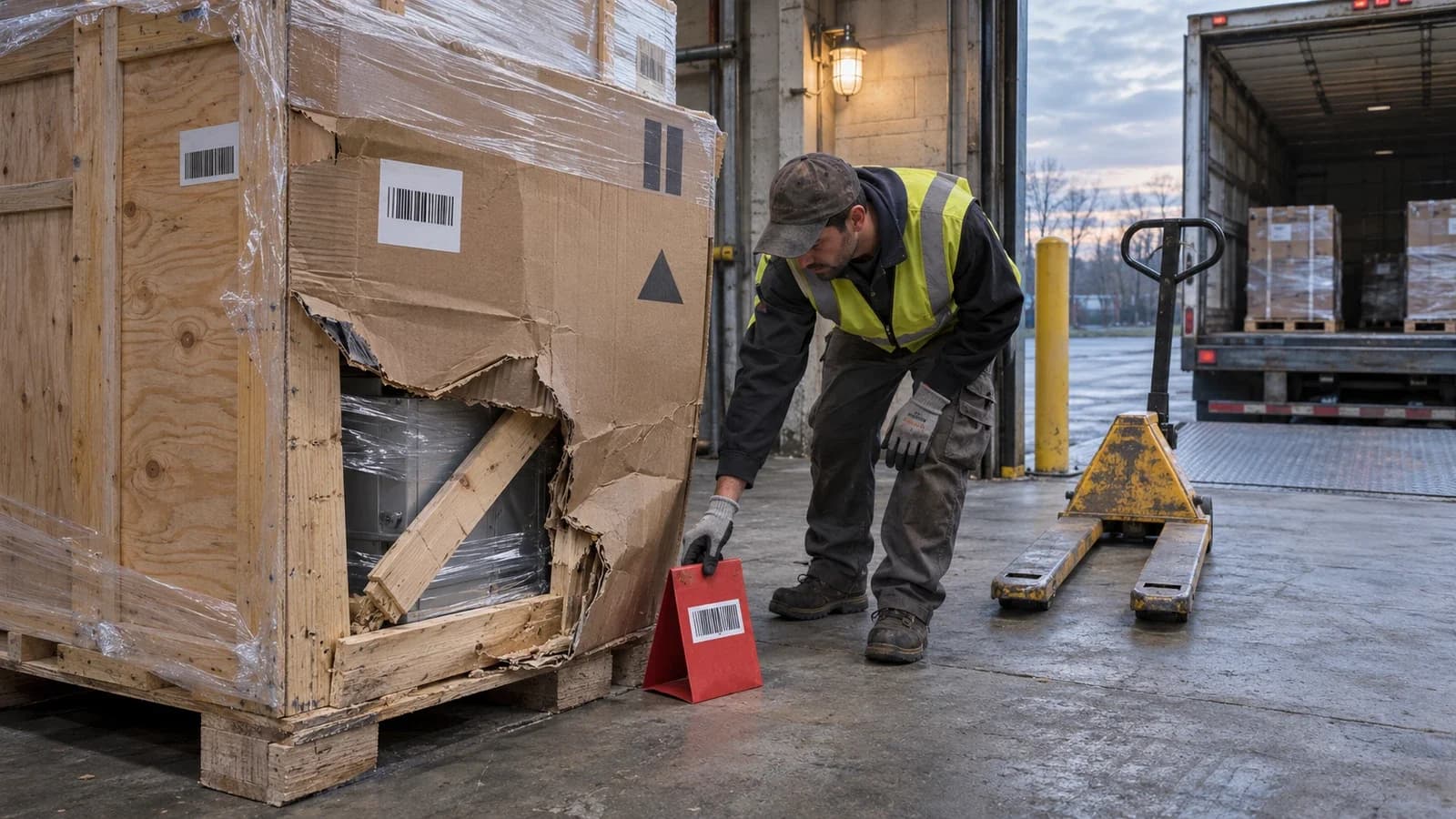
| Damage or shortage is buried in notes | Claims or customer service starts late | Create a structured exception with evidence attached |
| Several systems disagree about “delivered” | Teams lose trust in reports and customer status | Declare the system of record and reconcile explicit states |
What should you automate first?
Start with one delivery-completion path, not an entire transportation platform. A sensible first release often covers five capabilities:
- A driver or field-worker flow that identifies the assigned stop and captures only the evidence required for that outcome.
- Local persistence and visible synchronization status when connectivity is unreliable.
- Deterministic validation for signatures, quantities, photos, reason codes, and timestamps.
- A review queue for incomplete, ambiguous, damaged, short, refused, or disputed deliveries.
- One confirmed write-back to the system that owns shipment status, followed by the appropriate billing or notification event.
Android's official offline-first guidance recommends a local data source for critical functions and explains that restored connectivity requires synchronization and conflict resolution. That makes offline behavior a data-design decision, not a “try the upload again” button added at the end. Android Developers
Do not begin with handwriting recognition, predictive models, or a broad customer portal unless the core evidence path works. AI can help classify varied documents or interpret a note, but it should return a candidate result with the source visible. Required-field checks, shipment identity, billing authority, and exception ownership should remain explicit.
The POD Control Loop
Use five states to plan the workflow. Treat each transition as a testable contract.
| State | Question | Minimum control |
|---|---|---|
| Capture | What happened at the stop, and who recorded it? | Assigned stop, local event ID, device/user identity, outcome-specific evidence |
| Validate | Is the evidence complete and internally consistent? | Required fields, file integrity, timestamp policy, quantity checks |
| Decide | Is this a clean delivery, failed attempt, or exception? | Explicit rules, confidence boundary, named exception owner |
| Post | Which system may be changed, and what event is allowed? | Least-privilege integration, stable idempotency key, mapped status |
| Confirm | Did the destination accept the intended state? | Stored response, retry status, audit entry, visible failure queue |
This loop prevents three categories from collapsing into one: evidence (what was captured), interpretation (what the evidence means), and authority (which system action is permitted). A readable signature does not prove that the shipment ID is correct. A high-confidence document extraction does not authorize an invoice. A successful mobile upload does not prove that the TMS accepted the status change.
Define the evidence contract
Before choosing technology, write a compact contract for each delivery outcome:
- required fields and allowed file types;
- which shipment/order identifier must be present;
- who may record, correct, approve, or void the event;
- which values come from the assigned route rather than free text;
- what makes an event clean, incomplete, or exceptional;
- how long evidence is retained and who may view it;
- which downstream action is allowed for each state;
- how retries, reversals, and disputes are represented.
This contract becomes the acceptance test for a product configuration, integration, or custom build.
Architecture and failure handling
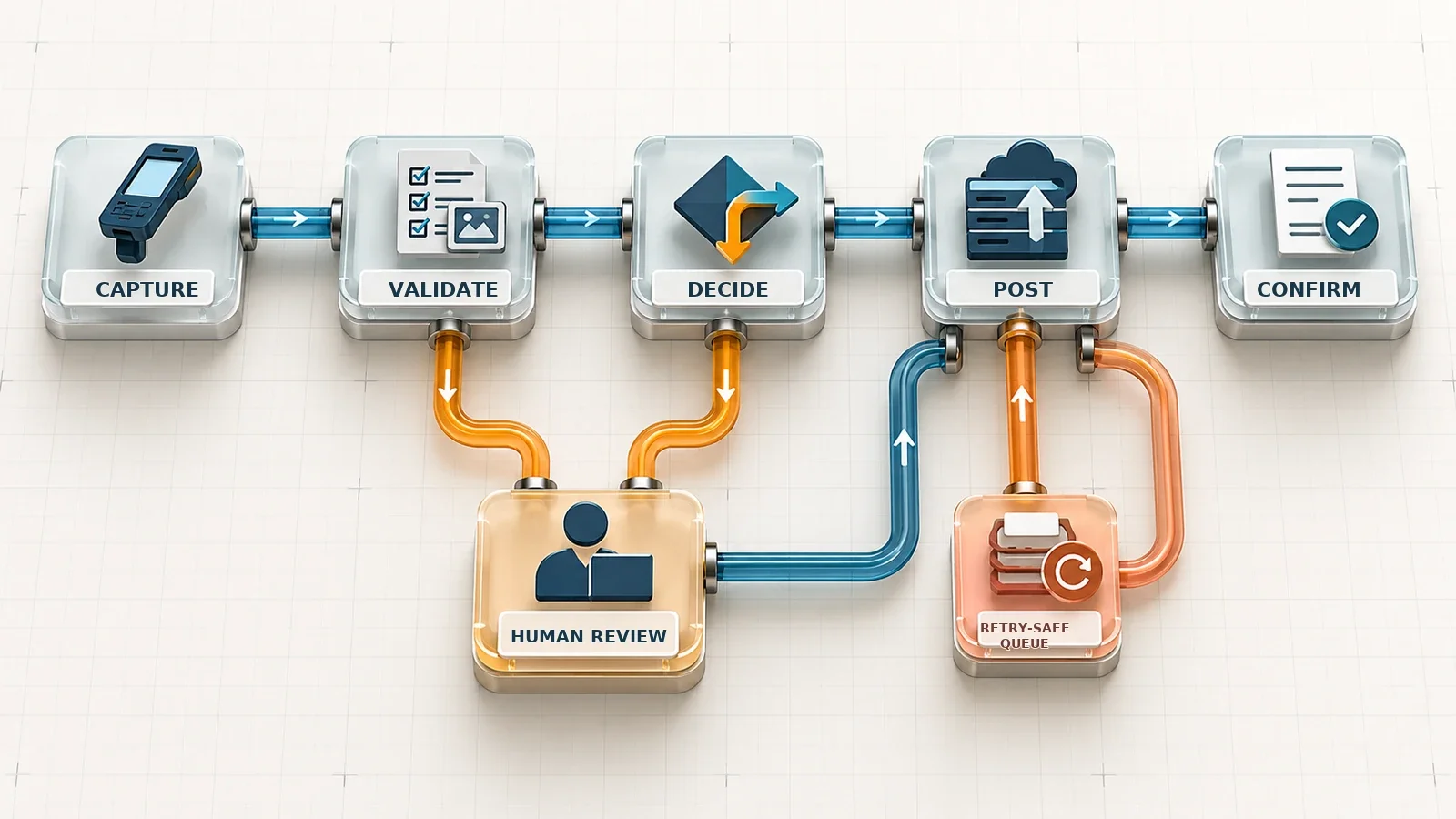
A practical architecture can be small: a mobile capture app or existing driver tool; an API and local synchronization layer; a rules service; evidence storage; an exception queue; and connectors to the TMS, ERP, billing, customer portal, or notification service. The important part is the boundary between them.
Design for retries and duplicates
Mobile clients retry. Webhooks can be delivered more than once. A coordinator may press submit after a slow response. AWS's publish-subscribe guidance notes that duplicate messages can occur and that consumers should be idempotent—processing the same logical event again without creating a second business effect. AWS Prescriptive Guidance
For POD, a stable event key might combine the shipment or stop ID with the delivery-attempt ID and event version. The receiving service should record the key before triggering billing release, customer notification, or claims creation. A repeated identical event can return the existing outcome. A changed event with the same identity should become a conflict or revision, not silently overwrite the original evidence.
Make failure states visible
“Uploaded” is not enough. Track at least local-saved, queued, uploading, received, validation-failed, review-required, posted, and posting-failed. The driver needs a clear answer about whether evidence is safe on the device. Operations needs a queue for records that never reached the system of record. Support needs an audit trail that explains the gap.
Enforce authorization per shipment
A delivery API exposes business objects, files, and actions. OWASP's API Security Top 10 highlights broken object-level authorization, broken authentication, property-level authorization problems, and unsafe consumption of APIs. In practical terms, verify that the authenticated user may access that specific stop or shipment, return only the fields the role needs, and constrain every downstream integration. OWASP API Security Top 10
Scope, effort, and value
There is no defensible universal POD project price or timeline without the operating scope. Estimate the work by decisions and dependencies, not screen count.
| Scope driver | Lower-effort condition | Higher-effort condition |
|---|---|---|
| Capture channel | Existing maintained driver app | New iOS/Android app, shared devices, external carriers |
| Evidence | One signature and reason-code flow | Photos, quantities, partials, temperature, attachments, multiple recipients |
| Connectivity | Reliable network and online-only policy | Offline writes, media queue, conflict handling, remote regions |
| Integrations | One documented TMS API | TMS, ERP, billing, CRM, portals, EDI, and legacy interfaces |
| Exception policy | Small stable taxonomy | Customer-specific rules, claims, approvals, and reversals |
| Identity and access | One workforce directory and role model | Partners, subcontractors, tenant boundaries, delegated access |
| Rollout | One operation and device profile | Multiple business units, countries, languages, and device classes |
Ask a delivery team to estimate discovery, design, implementation, integration testing, field testing, deployment, monitoring, and support separately. Third-party license, messaging, mapping, storage, device management, and model/API costs are recurring inputs, not part of a one-time build estimate.
A transparent value model
Use observed inputs from your operation:
Potential handling hours released per month = monthly delivery events × current minutes spent retrieving, checking, attaching, and routing evidence × eligible automation share ÷ 60
Then subtract review time, exception handling, support, software or model costs, maintenance, and implementation amortization. Track billing-cycle change or dispute-resolution change separately. Hours released do not automatically become cash savings or headcount reduction.
Before a pilot, record the baseline and definition for:
- complete-on-first-submit rate;
- time from stop completion to usable POD;
- percentage routed to review and the reason distribution;
- duplicate or conflicting events;
- posting failures and recovery time;
- time from validated POD to billing eligibility;
- user adoption and correction rate.
Do not claim savings until the pilot uses real volume and the finance owner agrees on the calculation.
Planning a POD workflow? Map one delivery outcome, its evidence, exception owner, system of record, and downstream action before estimating software. Discuss your workflow with Technanosoft.
Use cases and alternatives
Proof of delivery is not one uniform workflow.
| Use case | Useful automation | Human boundary |
|---|---|---|
| Clean business delivery | Validate signature/name/time and attach to shipment | Correct an identity or shipment mismatch |
| Partial delivery or shortage | Capture delivered quantities and open an exception | Decide commercial response and inventory correction |
| Visible damage | Require photos and condition codes; notify claims queue | Assess responsibility, claim, or customer remedy |
| Failed attempt | Capture reason, evidence, and next-step request | Approve reattempt, return, or customer-specific handling |
| Unattended delivery | Record approved evidence bundle and location context | Resolve disputes or policy exceptions |
| Carrier-supplied POD document | Extract candidate identifiers and match to shipment | Review low-confidence, handwritten, or conflicting evidence |
Rules-based automation is often enough for required fields, status mapping, thresholds, and routing. AI becomes relevant when document layouts vary, notes are unstructured, or a review queue needs assistance. Existing SaaS is usually better when its mobile flow, integrations, and evidence model match your operation. A process change may be the right answer when missing evidence is caused by unclear policy rather than software.
Choose it when / avoid it when
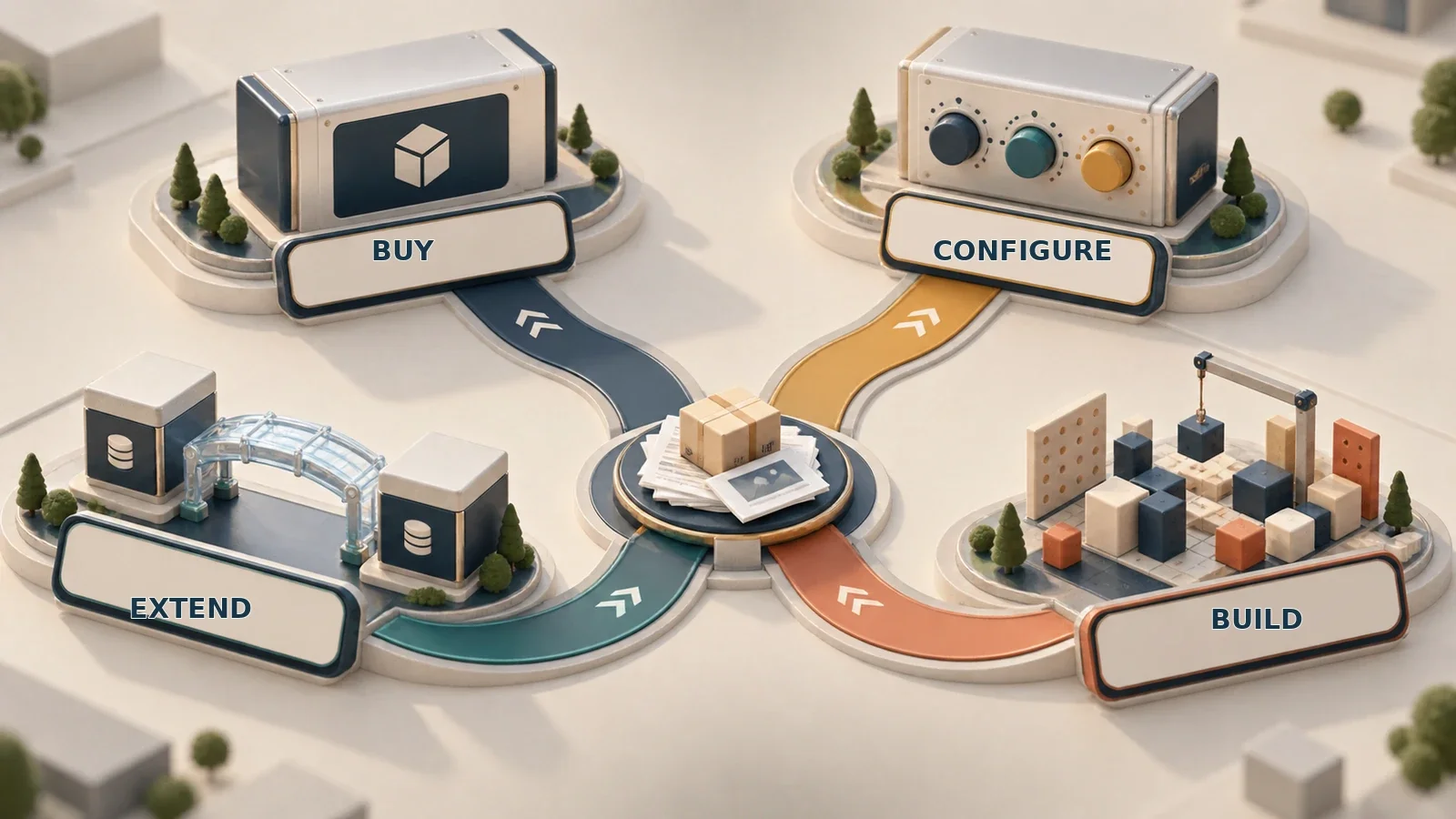
| Option | Choose it when | Avoid it when |
|---|---|---|
| Buy | Standard delivery workflow, supported connectors, acceptable evidence and retention controls | Product forces material workarounds or cannot expose required data |
| Configure | Your TMS or driver platform already has the capability | Configuration cannot represent exception ownership or offline needs |
| Extend | Core system is sound but lacks orchestration, portal, mobile flow, or one integration | Extension would duplicate most of a maintained product |
| Build | Workflow is differentiating, multi-system, role-specific, and stable enough to specify | Requirements are temporary, volume is small, or ownership/support is unclear |
The default question should be “What is the smallest reliable change?” A custom mobile app, AI service, or integration layer is justified only after product configuration and process fixes are tested against the evidence contract.
Risks, common mistakes, and controls
| Mistake | What can fail | Better control |
|---|---|---|
| Treating a photo as a complete POD | File cannot be matched or interpreted | Store structured event data and the original evidence together |
| Marking delivery complete before sync confirmation | Customer and billing state diverge from evidence state | Separate local capture, server receipt, and downstream confirmation |
| Retrying without event identity | Duplicate notices, claims, or billing actions | Stable event key, idempotent consumer, conflict state |
| Letting AI finalize ambiguous evidence | Wrong shipment or outcome is posted | Confidence boundary, source-visible review, deterministic authority rules |
| Hiding exceptions in a generic inbox | Ownership and aging disappear | Named queues, reason taxonomy, service targets, escalation |
| Giving a mobile role broad shipment access | Evidence or customer data can cross boundaries | Per-object authorization, minimal fields, scoped tokens |
| Ignoring corrections and reversals | Audit trail cannot explain the final state | Versioned event, reason, actor, time, and preserved prior evidence |
| Piloting only in strong connectivity | Field behavior fails after launch | Test tunnels, warehouses, dead zones, app restarts, and delayed media sync |
Illustrative workflow—not a client result
Consider a hypothetical regional distributor. A driver completes a stop while offline, records delivered quantities, obtains a signature, and photographs two damaged cartons. The app saves one event locally and displays “saved, waiting to sync.” When connectivity returns, the API receives the evidence bundle once, validates the shipment assignment, and identifies the damage reason. The shipment moves to “delivered with exception,” the clean quantities become available to the TMS, and a claims task opens with the original photos attached. Billing remains held because that outcome requires operations review.
This example shows desired state transitions only. It does not represent a Technanosoft client, measured result, guaranteed design, or legal conclusion.
Technical perspective
Treat proof of delivery as a small distributed system with commercial consequences. The safest design makes uncertainty explicit: locally saved is different from synchronized; synchronized is different from accepted by the TMS; delivered is different from delivered with exception; and extracted text is different from approved evidence. If those states are collapsed into a single green check mark, the software will create arguments instead of resolving them.
How to select a provider
Ask each product vendor or development partner to demonstrate the same difficult scenarios, not only a happy-path signature:
- A device loses connectivity after the driver taps submit.
- The same event arrives twice.
- A photo uploads but structured fields fail validation.
- The driver selected the wrong shipment.
- The TMS accepts the document but rejects the status change.
- A supervisor corrects or voids the event.
- A customer or claims user needs the evidence without broad shipment access.
Evaluate how clearly the provider explains data ownership, offline queues, conflict resolution, API limits, permissions, audit history, monitoring, export, support, and code/data ownership. For AI-assisted extraction, require a test set from your actual document mix, an agreed review policy, and error analysis by exception type. A polished demo is not evidence of production accuracy.
How Technanosoft approaches proof of delivery automation
Technanosoft's verified logistics and field-operations service describes mobile-first task updates, proof-of-work capture, exception handling, role-based controls, APIs, and offline-aware workflows. Its workflow-automation service describes intake, rules or AI-assisted decisions, system actions, human review, exceptions, and audit logs. These capabilities align with POD, but the right starting point is still the buyer's process—not a predetermined stack.
A practical engagement would begin by mapping delivery outcomes, required evidence, users, existing apps, source systems, billing gates, and exception owners. The next step is to test whether a maintained product can be bought or configured. If a gap remains, a focused first release might add a mobile capture flow, integration layer, review queue, or document-processing component without replacing a working TMS.
Architecture work should declare the system of record, event identity, offline behavior, permitted system actions, retention needs, and operational recovery path. AI can be added for document or note assistance where it provides measurable value, while deterministic rules and human approvals keep sensitive outcomes controlled. The release should be tested with real devices, weak connectivity, retries, incomplete evidence, role boundaries, and downstream rejections before expansion.
Technanosoft's public service pages are first-party descriptions of its capabilities, not independent proof of a specific POD deployment or outcome. Review the logistics and field operations service, AI workflow automation service, and custom software development service against your requirements.
Frequently asked questions
What is proof of delivery automation?
It is the controlled capture, validation, shipment matching, routing, and downstream use of delivery evidence. The output is not merely a PDF or photo; it is a delivery event with an outcome, evidence, ownership, and audit history that connected systems can use safely.
What should an electronic proof of delivery include?
That depends on the contract and operation. Common fields include the shipment or stop identifier, delivery outcome, date and time, recipient or reason code, quantities, signature, photos, notes, and the identity of the person or device recording the event. Define required evidence per outcome rather than making every field mandatory for every stop.
Can a POD app work without an internet connection?
Yes, if offline behavior is designed into the data layer. The app should save critical evidence locally, show synchronization state, retry deliberately, and resolve conflicts when connectivity returns. Media uploads, app restarts, duplicated submits, and device storage limits need explicit tests.
Where can AI help in proof of delivery processing?
AI can help classify varied POD documents, extract candidate fields, or interpret unstructured notes. It should not silently determine commercial truth. Keep the original evidence visible, use confidence or validation boundaries, and route ambiguous or high-impact outcomes to a named reviewer.
Should POD automatically release billing?
Only when the business rule is explicit and the validated outcome supports it. A clean delivery may become billing-eligible, while a shortage, damage, refusal, missing signature, or disputed event may need a hold. The POD workflow should emit a controlled state; the finance owner should define the billing gate.
How do you prevent duplicate POD events?
Give each delivery attempt a stable identity, make downstream consumers idempotent, and distinguish an identical retry from a changed revision. Preserve conflicts for review instead of overwriting evidence or triggering the same billing, notification, or claims action twice.
Is custom POD software always better than an ePOD product?
No. Buy or configure a maintained product when it supports your field flow, evidence requirements, integrations, security, and reporting. Extend an existing system when one meaningful layer is missing. Build only when the workflow is durable and differentiated enough to justify ownership and support.
The decision in one minute
If your team is chasing signatures and photos, begin with the evidence contract and one delivery outcome. If the current product already supports that contract, configure it. If the core platform is sound but the handoff to billing, claims, or customer communication is missing, add an integration or review layer. If the workflow spans unusual roles, offline conditions, customer rules, and systems that products cannot represent cleanly, a focused custom build may be justified.
Whatever path you choose, require visible states, duplicate-safe processing, a named exception owner, per-shipment authorization, and a confirmed downstream result. Those controls matter more than whether the interface uses AI.
Have a delivery-completion workflow to improve? Share the current capture method, exception path, systems, and billing handoff. Discuss your integration requirements with Technanosoft.