Technanosoft Insights
Fleet Telematics Integration: Identity, Freshness, and Failure Controls
A decision guide for connecting vehicle telemetry to fleet operations without losing asset identity, event timing, replay safety, or recovery control.
A decision guide for connecting vehicle telemetry to fleet operations without losing asset identity, event timing, replay safety, or recovery control.
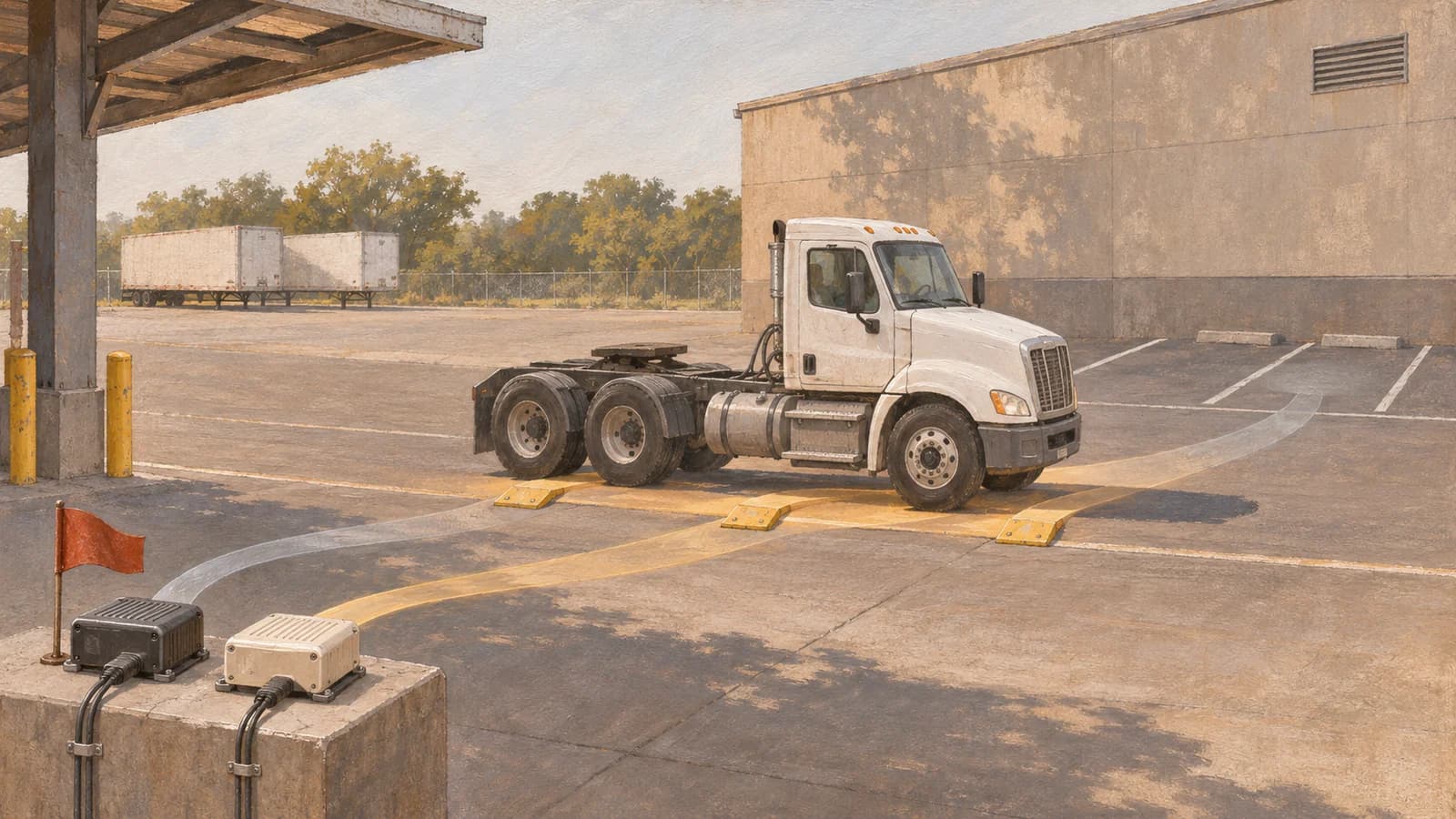
Fleet telematics integration should not begin with a map or dashboard. It should begin with the operational decision that vehicle data will influence, then define which asset produced each event, when the event actually occurred, how fresh it must be, and what happens when a feed is late, duplicated, corrected, or unavailable. Without those controls, a technically connected fleet can still make decisions from the wrong vehicle or the wrong moment.
Editorial draft: November 13, 2026 · Estimated reading time: 13 minutes
Quick answer
Fleet telematics integration connects vehicle and device data—such as location, odometer, engine hours, engine state, and diagnostic faults—to a TMS, dispatch, maintenance, ERP, analytics, or customer workflow. A reliable design maps devices to durable asset identities, preserves both event and arrival time, chooses feed, webhook, snapshot, or batch behavior by use case, processes retries idempotently, and exposes stale or missing data. Pilot one operational decision before expanding the data set.
Key takeaways
| Question | Decision-first answer |
|---|---|
| What should be designed first? | The business action and its acceptable freshness, not a universal “real-time” pipeline. |
| What causes the most dangerous ambiguity? | A device, vehicle, trailer, or driver identifier being treated as permanent when assignments can change. |
| Which sync method is best? | Feeds or webhooks for change-oriented workflows, snapshots for current-state views, and bounded history or files for backfill and reconciliation. |
| How should retries work? | Persist events idempotently, advance a cursor only after durable processing, and reconcile uncertain writes before replaying them. |
| What should the first release prove? | One bounded source-to-decision path, including stale data, device swaps, duplicates, outages, and rollback. |
On this page
- Who this guide is for
- Start with the action and freshness
- Define the data contract
- Keep asset and device identity separate
- Choose the right synchronization pattern
- Design for checkpoints and replay
- Select native, platform, or custom integration
- Roll out without trusting an unproven feed
- FAQs
Who this guide is for
This guide is for a fleet operations leader, transportation IT owner, product manager, or integration architect connecting a telematics provider with dispatch, a transportation management system, maintenance software, finance, analytics, or customer communications.
It is most useful when teams already have trackers and portals but still reconcile vehicles in spreadsheets, copy odometers manually, or discover that “live” locations have different ages in different systems. It is not a provider ranking, safety certification, or legal opinion. The purpose is to establish the operating contract before selecting a connector or estimating custom software.
Start with the operational action and its freshness
“Send us all telematics data in real time” is not a usable requirement. Location, engine state, fault codes, odometer, and temperature can update on different triggers and cadences. The required freshness also changes by action.
| Operational action | Useful input | Freshness question | Failure behavior to define |
|---|---|---|---|
| Show dispatch the last known position | location, observed time, source device | How old may the position be before it is visibly stale? | Keep the last value with its age; never imply live movement |
| Trigger a maintenance review | fault, odometer, engine hours, asset identity | Must the event be immediate, or is a scheduled sync acceptable? | Queue and reconcile; do not silently drop or duplicate the issue |
| Confirm arrival at a site | geofence or stop event, location quality, event time | How much delay and location variance can the workflow tolerate? | Hold the automatic action for ambiguous or late events |
| Build utilization reporting | normalized distance or hours, source, period | Is completeness more important than low latency? | Backfill and reconcile before closing the reporting period |
| Notify a customer | trip or stop status plus dispatch context | Which system is authorized to declare the milestone? | Fall back to internal review rather than send a false update |
Samsara's current developer documentation illustrates why one cadence cannot be assumed: it separates feed, history, and snapshot retrieval, and documents different update behavior for individual stat types. That is vendor-specific, but the design lesson is general: define freshness per datum and action, not per integration as a whole.
Define the telematics data contract
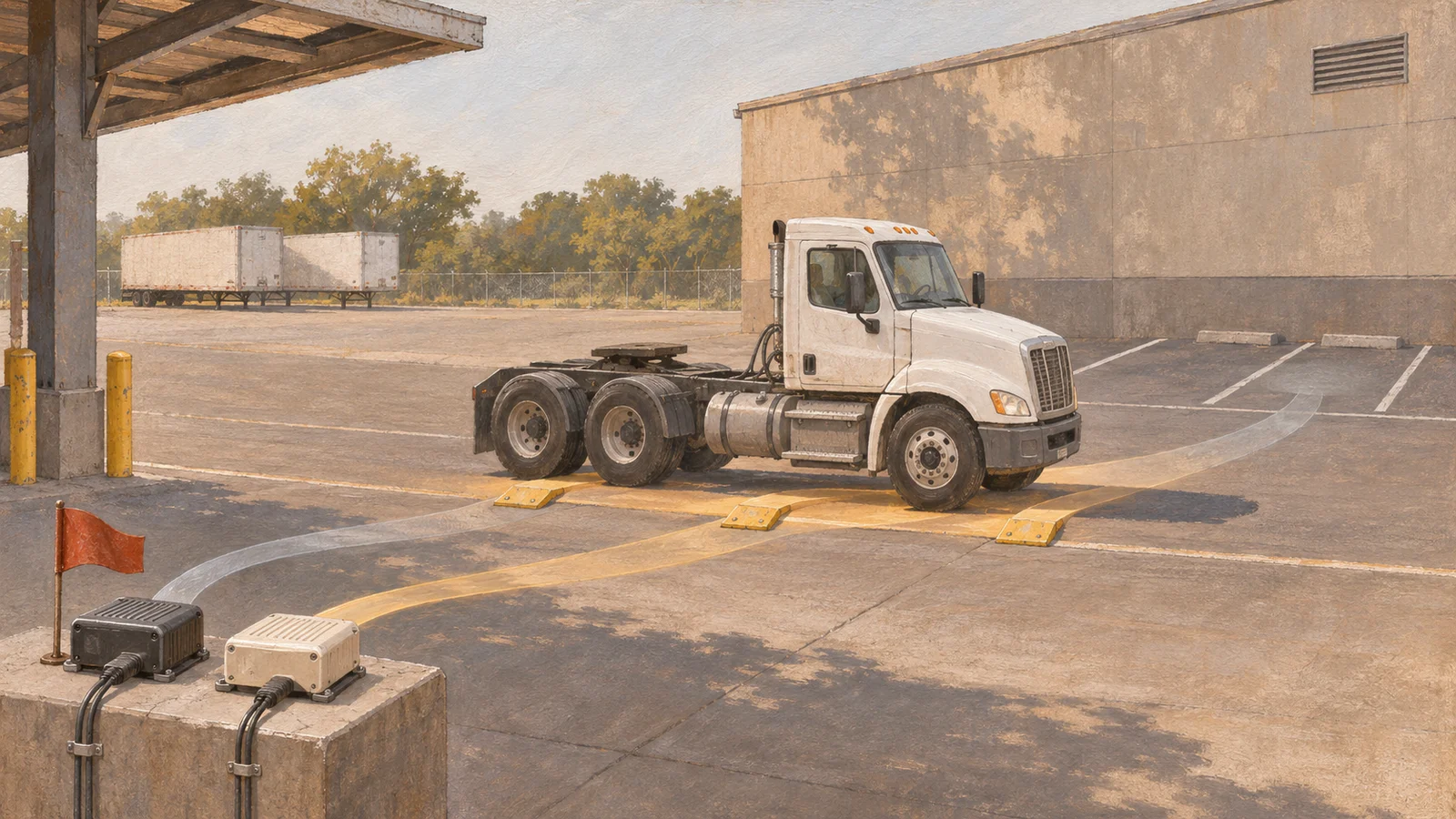
Before choosing middleware or writing an API client, define a contract for every event or state that crosses the boundary.
1. Identity
Record the durable fleet asset ID, provider asset ID, device ID, and any driver or trailer assignment that applies. Treat provider IDs as opaque values. Names, unit numbers, and license plates can change or collide; they are useful attributes, not always safe primary keys.
2. Meaning and unit
Specify whether a value is a raw observation, provider-derived value, fleet-calculated value, or business decision. Keep units explicit. A distance should not become an odometer without a documented rule, and a diagnostic code should not become a work order until a workflow owns that decision.
3. Four clocks
Preserve at least four times when the source supports them:
- Observed time: when the device measured or detected the event.
- Provider time: when the provider accepted or transformed it.
- Received time: when the fleet integration obtained it.
- Business-effective time: when a downstream decision became active.
These times answer different questions. Arrival order does not prove event order. A delayed GPS point may arrive after a newer point; a corrected trip may apply to an earlier period; a maintenance hold may become effective only after human review.
4. Quality and provenance
Retain source, precision or quality indicators when available, transformation version, and the reason for any correction. Do not overwrite a raw value with a normalized one and then call the result original evidence.
5. Idempotency and correction
Every write path needs a stable event identity or documented deduplication rule. Corrections should link to the prior record or upsert a stable identity, not create an unexplained second fact. Deletion is rarely a safe substitute for history.
Keep asset and device identity separate
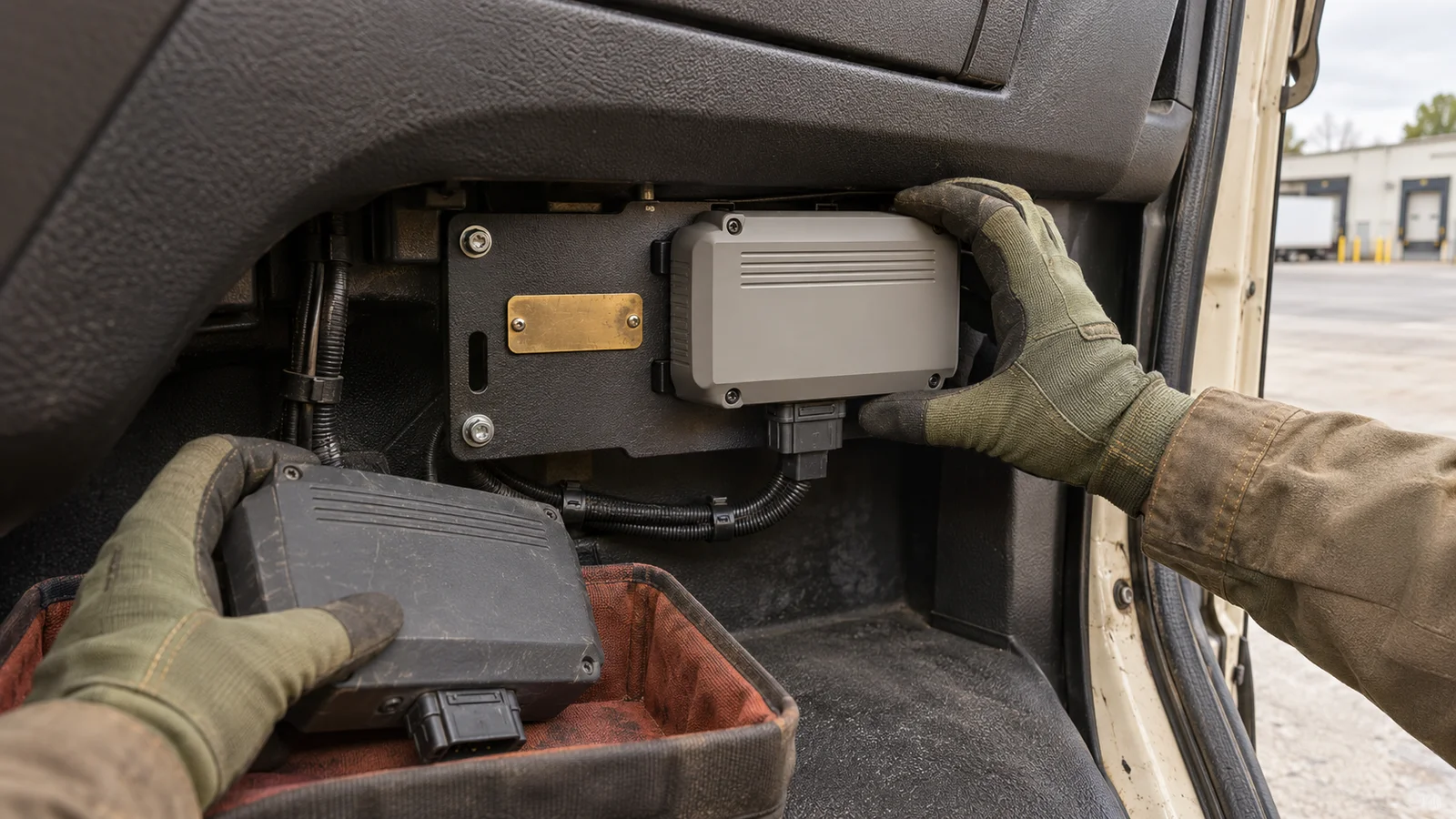
A telematics gateway belongs to a physical asset only for a period of time. Devices are installed, swapped, repaired, moved, or retired. Vehicles are sold or renumbered. Drivers change vehicles. Trailers attach and detach. A durable integration therefore needs assignment history, not one permanent device-to-vehicle column.
For each assignment, preserve:
- fleet asset ID and provider asset ID;
- device ID and hardware or configuration class where relevant;
- valid-from and valid-to times;
- who or what created the assignment;
- the reason for installation, swap, or retirement;
- overlap policy during cutover;
- reconciliation status for data that arrived near the boundary.
During a device replacement, temporarily receiving both old and new feeds may be expected. The integration must decide which readings are accepted, quarantined, or compared. A late event from the removed device can still describe an earlier valid moment. Rejecting everything after removal may lose legitimate history; accepting everything by arrival time may create two positions or duplicate distance.
Choose the right synchronization pattern
The source API and the operational action should determine the pattern.
| Pattern | Best fit | Main control |
|---|---|---|
| Change feed with cursor | continuous synchronization of supported event types | durable cursor, idempotent processing, lag monitoring |
| Webhook | selective low-latency events | authentication, deduplication, delivery retry, replay or reconciliation path |
| Snapshot | current-state display or periodic refresh | visible age and no claim that intermediate changes were captured |
| Bounded history query | initial backfill, investigation, or gap repair | explicit time bounds, pagination, completeness check |
| Scheduled file or batch | stable bulk exchange where latency is secondary | file identity, schema version, row-level rejection, period reconciliation |
| Native connector | common supported pairing with clear ownership | documented field coverage, cadence, history, support, and exit plan |
Samsara explicitly recommends its feed for synchronization and its history endpoint for backfill or ad-hoc retrieval. Fleetio's product documentation, meanwhile, distinguishes native integrations from API integrations and documents product-specific cadences and an initial lack of historical pull. Those examples reinforce a buyer question that feature lists often hide: exactly which data moves, in which direction, how often, with how much history, and who supports failures?
A hybrid is often appropriate. A fault event may need low-latency handling, while odometer reconciliation can run on a schedule and utilization reporting can wait for a complete period. Do not turn every field into a webhook simply because the provider offers one.
Make checkpoints, replay, and corrections safe
Continuous feeds fail in ordinary ways: the worker restarts, the network times out, a provider throttles requests, a downstream database is unavailable, or an older calculated record is corrected. Reliability comes from making those events routine.
Geotab's current reliable-integration guidance provides a useful concrete pattern: treat the feed cursor as a durable checkpoint, process returned data with idempotent upserts, and persist the next cursor only after the batch is durably handled. If a crash occurs before the cursor moves, the batch can replay; if the cursor moves first, uncommitted records can be lost.
A practical processing sequence is:
- Read the current cursor for one provider, tenant scope, and entity type.
- Fetch one bounded batch.
- Validate schema, identity, units, and timestamps.
- Write raw and normalized records idempotently.
- Route invalid or ambiguous records to a visible exception queue.
- Commit the batch and only then advance the cursor.
- Measure checkpoint age, batch lag, replays, rejects, and last successful processing time.
Rate limits and transient failures also need explicit behavior. Honor provider reset or retry instructions, reduce concurrency, and back off in a bounded way. Do not retry permission errors, invalid requests, or ambiguous writes unchanged. When a mutation may have succeeded, reconcile by its stable reference before repeating it.

Decide which system is allowed to act
Telematics is a source of observations. It does not automatically own every business decision those observations influence.
| Record or decision | Typical authority | Integration responsibility |
|---|---|---|
| Raw vehicle observation | telematics provider/device | preserve source, identity, observation time, and quality |
| Canonical vehicle identity | fleet asset registry or agreed system of record | maintain durable mappings and assignment history |
| Trip/load/stop plan | TMS or dispatch | correlate telemetry without overwriting planned facts |
| Maintenance issue | maintenance or safety workflow | apply rules, retain evidence, and preserve human decisions |
| Customer milestone | customer-operations or delivery workflow | use telemetry as evidence under an approved decision rule |
| Financial posting | ERP/accounting | accept only reconciled, authorized business records |
This boundary matters when systems disagree. A telematics event can suggest arrival; dispatch context determines whether the vehicle was serving the intended stop. A fault code can trigger review; the maintenance process decides the operating restriction. A location can be stale; the interface must show its age rather than manufacture certainty.
Choose native, iPaaS, or custom integration
Most fleets should use the smallest integration layer that can enforce the required contract.
| Option | Choose it when | Avoid it when |
|---|---|---|
| Native connector | provider pairing, fields, cadence, history, and support model fit the workflow | critical fields or recovery controls are absent or opaque |
| Integration platform (iPaaS) | common APIs, moderate transformations, and operations ownership fit the platform | high-volume feeds, provider-specific cursor logic, or complex state reconciliation exceed the tool |
| Custom integration service | identity history, event volume, normalization, recovery, or business controls are distinctive | the requirement is a standard supported connector with no defensible custom need |
| Shared data platform | multiple providers and consumers need governed reusable events | governance and ownership are not funded, turning the platform into another uncontrolled copy |
The decision should cover exit as well as entry. Ask how credentials rotate, how devices and vehicles are remapped, how history is exported, what happens when the provider schema changes, and how a new provider can run in parallel without double-counting the fleet.
Scope and cost drivers
A responsible estimate depends on:
- number of providers, accounts, fleets, devices, and asset classes;
- events and stat types, update frequency, history, and retention;
- identity quality and device-swap frequency;
- downstream TMS, maintenance, ERP, customer, and analytics systems;
- API limits, webhook behavior, schema stability, and support obligations;
- normalization, geospatial, time-zone, and unit rules;
- security, privacy, role, audit, and data-residency requirements;
- monitoring, reconciliation, backfill, disaster recovery, and cutover waves.
Do not estimate from endpoint count alone. One high-volume cursor feed with corrections and ambiguous device assignments can require more control work than several low-risk reference-data endpoints.
Security and privacy belong in the data contract
Vehicle location, driver association, camera or sensor metadata, and operational routes can be sensitive. Use dedicated integration credentials with the least access needed, keep secrets out of client applications and logs, separate customer or fleet scopes, and define retention before copying raw data into additional systems.
Record who can view current location, export history, change an asset-device assignment, request a backfill, or trigger a customer-facing action. Monitor credential failures and unexpected scope changes. Security is not complete because transport uses HTTPS; authorization, data minimization, auditability, and revocation still need owners.
Roll out before telematics controls operations
Phase 1: inventory and contract
List the operational action, required fields, source endpoints, identifiers, clocks, units, quality flags, limits, history, and failure paths. Sample actual records without copying unnecessary sensitive data.
Phase 2: reconcile identity
Build the asset/device/driver crosswalk. Test duplicates, missing provider IDs, renamed units, device swaps, overlapping assignments, and retired equipment. Establish who can correct mappings and how corrections propagate.
Phase 3: shadow the feed
Run the new path without changing dispatch, maintenance, billing, or customer messages. Compare source counts, checkpoint lag, stale data, duplicates, corrections, rejects, and coverage across busy and quiet periods.
Phase 4: control one decision
Enable one bounded action, such as surfacing a stale-aware last position or creating a maintenance-review candidate. Keep current fallback and supervisor review. Test provider outage, authentication expiry, throttling, late data, replay, and downstream unavailability.
Phase 5: cut over and reconcile
Freeze the mapping and code revision for the wave, record the final old-system checkpoint and first new-system checkpoint, and keep rollback criteria explicit. Reconcile vehicle coverage and business outcomes before disabling the prior path.
Phase 6: expand deliberately
Add fields, workflows, providers, or consumers only after the first contract is stable. AI may help summarize exceptions or classify support cases, but it should not substitute for deterministic identity, timestamp, unit, or retry controls.
Common implementation mistakes
| Mistake | Consequence | Better approach |
|---|---|---|
| Calling every value real time | users act on stale or mixed-cadence data | define freshness by field and action |
| Treating a device ID as the vehicle | swaps split or merge asset histories | maintain time-bounded device assignments |
| Sorting only by arrival time | late data rewrites the operational sequence | preserve observed, provider, received, and effective time |
| Advancing the cursor before commit | a crash creates a permanent gap | move the checkpoint only after durable processing |
| Making retries create new records | duplicates reach maintenance, billing, or reporting | use stable event identity and idempotent writes |
| Using a snapshot as history | intermediate events disappear | use the provider's change feed or bounded history pattern |
| Going live without a shadow period | mapping and cadence defects become operational defects | reconcile first, then enable one decision |
| Copying all raw data everywhere | unnecessary privacy, cost, and support exposure | minimize fields and retain source governance |
How Technanosoft approaches fleet telematics integration
Technanosoft's public logistics and field-operations capability includes route workflows, location-aware updates, exception handling, role-based administration, reporting, and cloud-ready APIs. Its custom-software positioning also covers API-based platforms and workflow-first discovery. Those are relevant building blocks, but they do not prove that every fleet needs custom middleware or that one architecture fits every provider.
The useful starting point is one operational decision and one representative data path. Map the physical asset, device assignment, provider behavior, downstream authority, required freshness, failure recovery, and human override. Then decide whether an existing connector is enough, an integration platform can own the transformation, or a narrow custom service is justified.
A focused first release might normalize one provider's feed, preserve the four clocks, expose freshness, and publish a replay-safe event to a TMS or maintenance workflow. Monitoring and an exception queue are part of that release, not follow-up polish.
Planning a fleet telematics integration? Bring one provider's current API documentation, a small redacted event sample, the asset mapping, and the downstream decision to a workflow and architecture discussion before choosing the integration layer.
How to evaluate a telematics integration partner
Ask a product vendor, integrator, or development partner to explain:
- the exact fields, directions, cadence, history, and limits of the connection;
- how device, vehicle, trailer, and driver assignments are represented over time;
- which timestamp orders events and which timestamps remain available for audit;
- how checkpoints, duplicates, corrections, and late data are handled;
- how stale or missing data appears to operators;
- how permission, rate-limit, timeout, and ambiguous-write failures differ;
- how the feed is monitored and reconciled against the provider;
- how device swaps, provider migration, parallel run, rollback, and export work;
- who owns support when the source, connector, and destination disagree.
A useful answer includes failure paths and operational ownership, not only a diagram showing arrows between logos.
Frequently asked questions
What is fleet telematics integration?
It is the controlled exchange of vehicle or equipment observations—such as location, odometer, engine hours, engine state, and fault data—with fleet systems that use those observations. The integration includes identity, timing, validation, retries, monitoring, and business ownership; it is more than connecting two endpoints.
Should a fleet use webhooks or polling?
Use the pattern the provider supports for the required event and freshness. Webhooks can deliver selective low-latency events but still need authentication, deduplication, retries, and reconciliation. Cursor feeds can be more suitable for continuous high-volume synchronization. Snapshots and bounded history serve different purposes.
How do you prevent duplicate telematics events?
Prefer a provider event ID or stable source identity. When none exists, define a documented deduplication key using source, asset or device, event type, observed time, and other immutable attributes. Store writes idempotently and preserve correction behavior; do not rely only on arrival time.
What happens when a telematics device is replaced?
Close the old device assignment at a known time, open the new one, preserve any approved overlap, and reconcile events near the boundary using observed time and source. Test late events from the removed device and confirm that the replacement does not create a second asset.
Is a last-known vehicle location “real time”?
Not necessarily. It is one observation with an age, source, and quality. Show that age and apply an action-specific stale threshold. A snapshot may be useful for a current-state view but does not prove that every movement event was captured.
When is custom telematics integration justified?
Custom work can be justified when multiple providers, high event volume, distinctive identity rules, proprietary workflows, or required recovery controls exceed a native connector or integration platform. If a supported connector covers the real contract, custom code may add cost without adding control.
Can AI improve fleet telematics integration?
AI can help summarize exceptions, classify support cases, or assist analysts after reliable events exist. It should not invent missing telemetry, resolve identity conflicts without evidence, or replace deterministic validation and accountable operating decisions.
The decision in one minute
Choose the operational action first. Define the asset, device assignment, meaning, unit, four clocks, freshness, and source authority for every datum that action consumes. Select a feed, webhook, snapshot, history query, file, or native connector according to that contract. Make processing idempotent, move checkpoints only after durable work, expose stale and rejected data, and shadow the path before it controls operations. If a connector can satisfy those rules, use it. Build custom integration only where the operational control is genuinely distinctive.