Technanosoft Insights
Fleet Maintenance Software Integration: From Inspection to Release
A decision guide for connecting inspections, telematics, maintenance issues, work orders, parts, and dispatch availability without losing defect history or releasing vehicles prematurely.
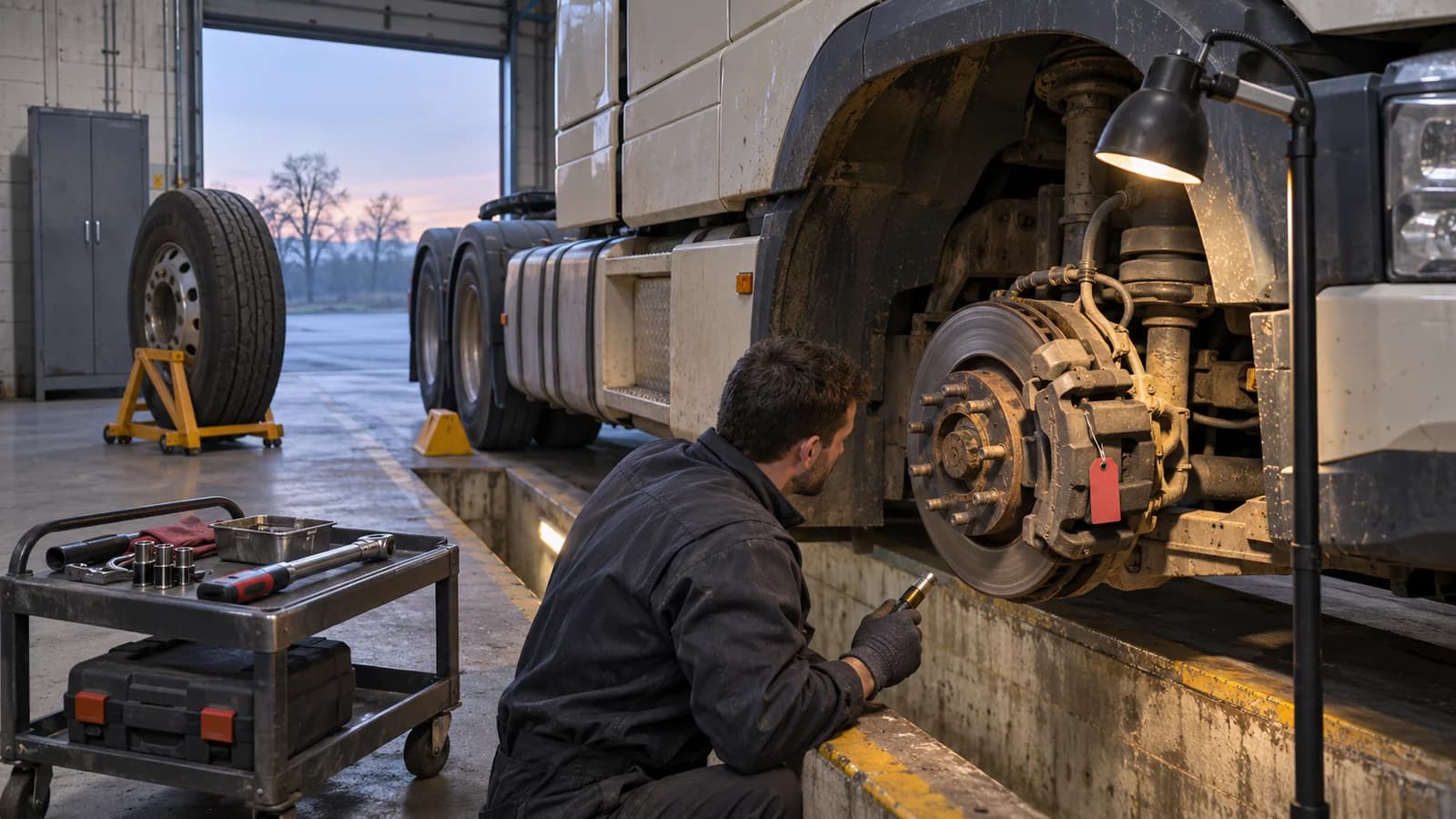
A decision guide for connecting inspections, telematics, maintenance issues, work orders, parts, and dispatch availability without losing defect history or releasing vehicles prematurely.
FLEET AND MAINTENANCE OPERATIONS
Fleet maintenance software should do more than schedule service. It should connect the moment a defect is observed with the issue, work order, parts, verification, and release decision that follow. The hard part is preserving that chain across driver inspections, telematics, shop work, outside vendors, inventory, and dispatch without letting a later status hide an unresolved safety or reliability concern.
Editorial draft: November 12, 2026 · Estimated reading time: 13 minutes
Quick answer
Fleet maintenance software integration connects asset identity, inspections, meter readings, fault data, work orders, parts, service history, and dispatch availability. A reliable design gives every defect a durable identity, keeps the originating evidence attached to its repair, distinguishes “work completed” from “vehicle released,” and makes meter provenance visible. Start with the inspection-to-release loop for one asset class before automating predictions or expanding across locations.
Key takeaways
| Question | Decision-first answer |
|---|---|
| What should the first release cover? | Asset identity, inspections, defect triage, work orders, parts used, verification, and release status. |
| What causes most integration risk? | Duplicate assets, conflicting meter readings, detached inspection evidence, premature issue closure, and unclear release authority. |
| Should the maintenance system replace telematics or dispatch? | Usually no. It should consume trusted usage and fault data and publish controlled availability without taking ownership of unrelated workflows. |
| Where can AI help? | Bounded assistance such as summarizing technician notes or suggesting likely work categories, with evidence and human approval preserved. |
| What is the safest rollout? | Reconcile asset identity, shadow data, enable one defect-to-work-order flow, then let verified release status affect dispatch. |
On this page
- Who this guide is for
- What fleet maintenance software should include
- The inspection-to-release loop
- System ownership and integration
- Meters, inspections, and work orders
- Architecture and controls
- Buy, extend, or build
- Rollout plan
- FAQs
Who this guide is for
This guide is for a fleet maintenance director, safety or compliance leader, operations leader, or IT owner planning a maintenance platform or connecting an existing one with telematics, driver inspections, a transportation system, dispatch, parts inventory, accounting, or outside repair providers.
It is especially relevant when a fleet still relies on a mix of paper inspections, spreadsheets, whiteboards, emailed invoices, telematics portals, and dispatch notes. It is not a product ranking or legal opinion. The goal is to define the operating controls and integration boundary before selecting software or estimating custom work.
What fleet maintenance software should include
At minimum, the maintenance layer should answer six questions without asking an operator to reconstruct the story from separate systems:
- Which asset is this? One durable identity should connect the vehicle or equipment unit with external IDs, registration or serial data, asset class, ownership, and current operating status.
- What was observed? Inspection failures, driver reports, technician findings, fault codes, and breakdown notes should retain source, time, asset, and supporting evidence.
- What decision was made? The record should show whether the finding was acknowledged, monitored, scheduled, placed on hold, or converted into work.
- What work occurred? A work order should record assigned shop or vendor, tasks, labor, parts, dates, and completion evidence.
- Who verified the outcome? Repair completion is not always the same as independent verification or regulatory sign-off.
- Who released the asset? Dispatch availability should change only through an authorized rule or person, with the decision preserved.
Current US regulation provides an important baseline for covered commercial fleets. 49 CFR 396.3 requires systematic inspection, repair, and maintenance and identifies vehicle information, maintenance due dates, and dated maintenance records among the required records. The FMCSA Motor Carrier Safety Planner summarizes those record categories while noting that the published regulations control. Applicability depends on the operation and jurisdiction, so software requirements should be confirmed with the fleet's qualified compliance owner.
Software should support that discipline without pretending that a database field alone makes a vehicle safe.

Use an inspection-to-release control loop
The most useful first design artifact is a control loop, not a dashboard:
Identify → observe → decide → repair → verify → release
| Stage | Minimum record | Control question |
|---|---|---|
| Identify | Canonical asset ID and external identifiers | Are all systems referring to the same physical unit? |
| Observe | Inspection item, fault, note, photo, reading, or breakdown event | What happened, when, and from which source? |
| Decide | Severity, operating restriction, owner, due rule, and escalation | May the asset continue operating, and who decided? |
| Repair | Work order, tasks, technician or vendor, labor, parts, and dates | What work was actually performed? |
| Verify | Reinspection, test, sign-off, or documented exception | Did the evidence needed for closure pass? |
| Release | Authorized availability change and effective time | Who returned the asset to service, under which rule? |
This loop prevents two common shortcuts. First, a work-order completion should not automatically erase the defect that created it. Second, a later passing inspection should not silently close an earlier open issue. Fleetio's current inspection documentation illustrates the distinction: inspection findings can create issues, and those issues remain open until resolved through a service entry, work order, or explicit close action. The exact statuses will differ by product, but the control principle should remain.
Use stable IDs for the asset, defect, work order, and release decision. Preserve correction links instead of overwriting history. If an inspection is submitted twice because a mobile device retried, idempotency should return the existing event rather than create a second defect.

Decide which system owns each record
Fleet maintenance software rarely operates alone. It may receive utilization from telematics, fault codes from vehicle gateways, driver reports from an ELD or mobile app, parts from inventory, invoices from accounting, and availability requests from dispatch. “Integrate everything” is not a design. Ownership must be explicit per record.
| Record or decision | Typical authority | Read-only consumers | Write-back rule |
|---|---|---|---|
| Canonical asset identity | Fleet asset registry or maintenance platform | Telematics, dispatch, finance, analytics | External IDs map to one durable asset; merges require audit history |
| Raw odometer or engine-hours reading | Telematics or approved meter source | Maintenance platform, analytics | Store source and observed time; do not silently blend conflicting readings |
| Inspection submission | Inspection application or maintenance platform | Safety, shop, dispatch | Immutable original plus linked corrections |
| Defect severity and operating restriction | Maintenance or safety workflow | Dispatch, driver app, reporting | Only authorized roles change the restriction |
| Work-order execution | Maintenance platform or shop system | Dispatch, finance, asset history | Completion does not imply release unless the policy says so |
| Parts on hand and movement | Inventory or ERP module | Work order, purchasing, cost reporting | Consumption links to the task that used it |
| Dispatch availability | Dispatch or TMS, informed by maintenance release | Driver app, planners, customer operations | Maintenance publishes hold/release facts; dispatch owns assignment |
Trimble's fleet-maintenance product description is one example of this integration surface: diagnostics and DVIRs connect to work orders and parts, while accounting, telematics, and transportation systems remain related systems. That is useful evidence that the boundary exists, not a requirement to reproduce one vendor's architecture.
Treat meter and defect provenance as operational data
Preventive maintenance often depends on mileage, engine hours, calendar time, or a combination. Those values look simple until multiple devices disagree.
Samsara's developer guidance distinguishes direct onboard-diagnostics readings from calculated alternatives for odometer and engine runtime. A maintenance integration should preserve that distinction. For each reading, retain:
- asset identity and source device;
- measurement type and unit;
- observed time and ingestion time;
- raw value and any approved correction;
- confidence or source class when calculated values are possible;
- the service rule that consumed the reading.
Do not allow a lower late-arriving reading to move a due threshold backward without review. Do not treat a missing meter update as “no service due.” Show data freshness and use a documented fallback when the primary source is unavailable.
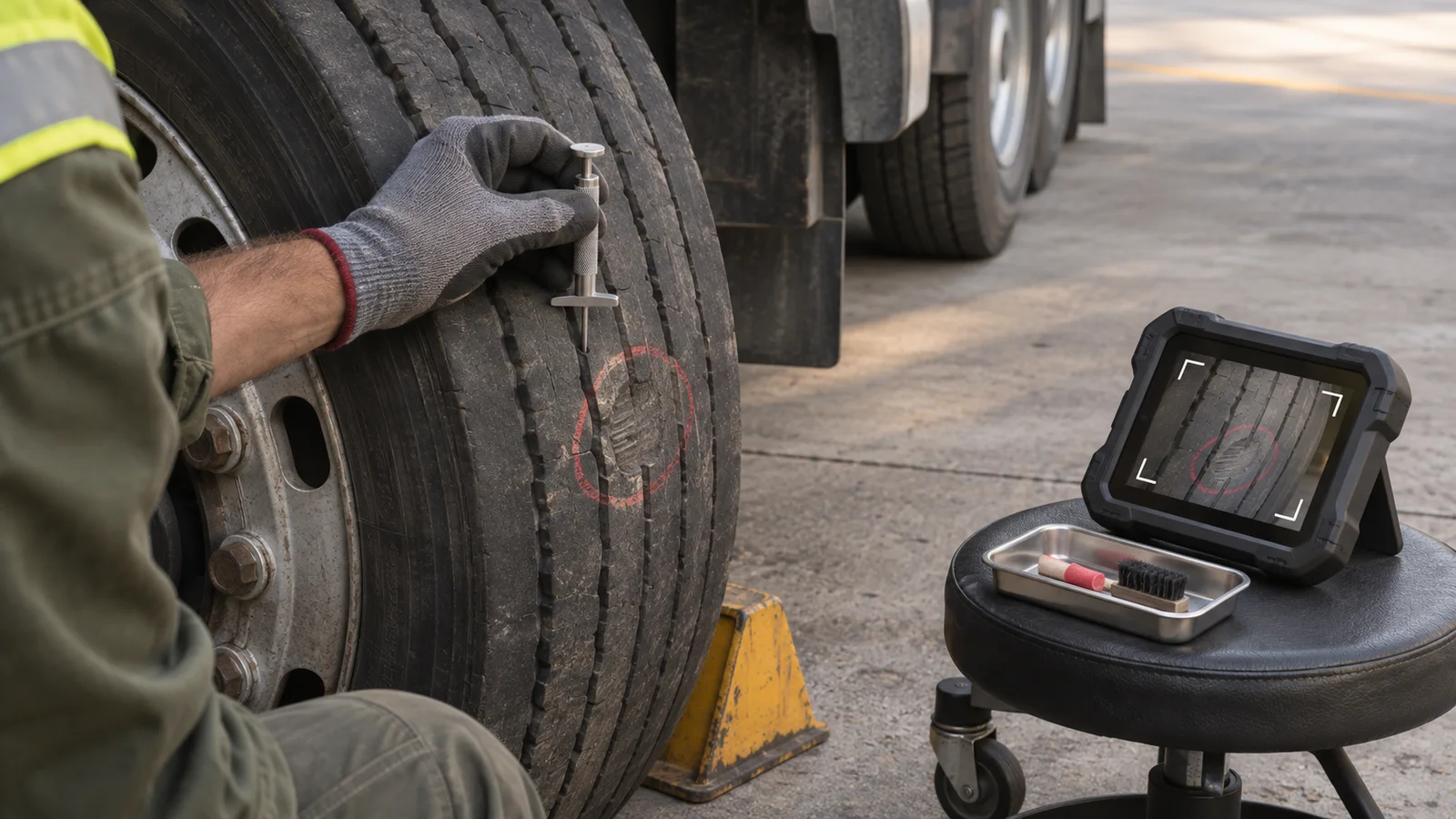
Inspection evidence requires the same care. A failed brake, tire, light, coupling, or safety item should carry its original answer, remark, media, inspector, and time into triage. If the defect becomes a work order, the link should be durable. If the decision is to monitor or close without repair, preserve the reason and authority instead of deleting the finding.
Design work orders around execution, not status alone
A useful work order is more than `open`, `in progress`, or `complete`. It should tell the next person what the vehicle needs, what has already happened, and what evidence is still missing.
The core structure usually includes:
- asset and originating defect links;
- priority, restriction, location, and assigned shop or vendor;
- service tasks with labor, parts, notes, and completion state;
- requested, scheduled, started, completed, verified, and released timestamps;
- authorization rules for estimates, outside work, and parts substitution;
- attachments that are evidence, not invented proof;
- reopen and correction paths.
Fleetio's work-order documentation illustrates service tasks, labor, and parts as separate but linked line items. The exact model is product-specific, yet the underlying decision is universal: if a part, task, or labor entry matters to the maintenance record, it should remain attached to the work that consumed it.
Outside repair adds another boundary. Vendor invoices may arrive after the vehicle has returned, estimates may change, and a vendor's “complete” status may not satisfy the fleet's verification policy. Treat vendor updates as inputs to the control loop, not unconditional release commands.
A practical fleet-maintenance integration architecture
A controlled architecture can stay understandable:
- Experience layer: driver or technician inspection app, shop work queue, supervisor view, parts workflow, and dispatch hold visibility.
- Maintenance workflow service: assets, defects, severity, work orders, service programs, approvals, verification, and release.
- Integration layer: telematics, ELD or DVIR source, TMS/dispatch, ERP/accounting, inventory, vendors, identity, notifications, and analytics.
- Operational database and audit store: current state, immutable source events, correction links, idempotency keys, and attachment metadata.
- Control layer: role-based access, device identity, validation, monitoring, reconciliation, retention, and manual recovery.
Use events for facts such as `inspection_failed`, `meter_observed`, `work_completed`, and `asset_released`. Use commands for decisions such as “create work order,” “approve outside repair,” or “return to service.” That distinction makes retries and responsibility easier to reason about.
AI may summarize a long technician note, classify a likely service category, extract fields from an approved document, or surface similar prior repairs. It should not invent a diagnosis, fabricate a completed inspection, or release an asset without a separately validated policy and accountable approval path.
Buy, extend, or build the maintenance layer
Most fleets should not build a full maintenance product from zero. Mature products already cover assets, schedules, inspections, work orders, parts, and service history. The practical decision is whether a standard product fits, whether a narrow extension is needed, or whether an integration/orchestration layer should connect existing systems.
| Option | Choose it when | Avoid it when |
|---|---|---|
| Buy a packaged maintenance platform | Core workflows are standard, integrations cover the fleet's systems, and configuration can enforce release controls | Critical asset, vendor, or approval rules cannot be represented safely |
| Extend an existing platform | The core product fits but one mobile, approval, reporting, or vendor workflow is distinctive | Extensions would replace most of the product or break upgrades |
| Build an integration layer | Telematics, inspections, maintenance, and dispatch must remain separate authorities but need reliable event exchange | The layer would become an unowned duplicate maintenance system |
| Build a custom platform | Maintenance workflow is strategically distinctive, asset types or hardware are unusual, and long-term product ownership is funded | Requirements are generic, support is unclear, or recordkeeping has not been defined |
Scope and cost drivers
A responsible fixed estimate requires more than a screen list. The largest drivers are:
- asset classes, fleet size, sites, and maintenance providers;
- inspection types and jurisdiction-specific rules;
- telematics, ELD, dispatch, ERP, inventory, and vendor interfaces;
- mobile offline behavior, attachments, and device management;
- meter reconciliation and historical data quality;
- parts, purchasing, warranty, and cost-allocation depth;
- approval, verification, release, retention, and audit requirements;
- availability, support hours, migration, and rollout waves.
Estimate by validated workflow and integration slices. Do not convert an unverified “dashboard count” into certainty.
Roll out before maintenance status controls dispatch
A safe rollout proves identity and data flow before a new status can remove or return a vehicle from service.
Phase 1: reconcile assets
Build the crosswalk among maintenance, telematics, inspection, accounting, and dispatch identifiers. Resolve duplicates and establish a correction process. Sample meter histories and confirm units, source priority, and time behavior.
Phase 2: shadow inputs
Ingest inspections, meter readings, and faults without changing the current maintenance or dispatch process. Compare duplicates, latency, missing records, and false matches. Make freshness visible.
Phase 3: control one defect class
Enable one inspection-to-work-order path for a bounded asset class, site, or shift. Preserve current escalation and release procedures. Reconcile every created, resolved, reopened, and manually closed issue.
Phase 4: publish holds and releases
Let verified maintenance decisions inform dispatch availability through an explicit contract. Test late updates, retries, outages, supervisor overrides, and rollback. A stale “available” value must not silently win over a newer hold.
Phase 5: expand capabilities
Add parts automation, vendor exchange, warranty workflows, cost analysis, or bounded AI assistance only after the defect and release chain is trustworthy. Expand by asset class or site with local process validation.
Common implementation mistakes
| Mistake | Consequence | Better approach |
|---|---|---|
| Treating VIN or unit number as infallible | Duplicate or mislinked histories | Use a canonical asset ID with audited external mappings |
| Blending meter readings without provenance | Incorrect service due dates | Preserve source, type, time, and correction history |
| Closing a defect when a work order is opened | Lost safety and repair accountability | Keep defect and work-order states linked but distinct |
| Equating vendor completion with vehicle release | Premature dispatch availability | Require the fleet's verification and release rule |
| Letting a passing inspection erase an open issue | Hidden unresolved work | Resolve the issue explicitly and preserve both records |
| Starting with predictive maintenance | Sophisticated recommendations on unreliable inputs | Stabilize identity, meters, inspections, and work history first |
| Switching all sites at once | Weak diagnosis and operational disruption | Pilot one bounded workflow, then expand in waves |
How Technanosoft approaches fleet-maintenance integration
Technanosoft's public logistics and field-operations capability includes mobile forms, task tracking, exception handling, role-based administration, reporting, cloud-ready APIs, and offline-aware workflows. Its public work also includes inspection-management capability. Those are relevant building blocks, but they do not prove that every fleet needs custom software.
The work should begin with the current maintenance loop: who observes a defect, who decides its severity, where work is performed, how parts and outside vendors are tracked, what verification is required, and who releases the asset. The system map follows that workflow. Only then should the team decide whether to configure a packaged platform, extend one, or build a narrow integration layer.
A focused first release can connect an existing inspection or telematics source to a controlled maintenance queue and publish verified holds or releases to dispatch. Mobile and web experiences, backend services, integrations, role-based controls, audit history, and monitoring should be selected according to that boundary. AI belongs only where it supports a defined task and keeps evidence and approval clear.
Planning a fleet-maintenance integration? Bring one representative defect, its current paper or digital trail, the system list, and the release policy to a workflow and architecture discussion before selecting the build boundary.
How to evaluate a fleet-maintenance software partner
Ask product vendors or development partners to explain:
- how they prevent duplicate assets and reconcile identifiers;
- which meter source wins and how stale or lower readings are handled;
- how an inspection failure remains linked to repair and verification;
- whether a work-order completion automatically changes availability;
- who can close, override, reopen, or release and how that is audited;
- how outside vendors, parts, invoices, and late updates are reconciled;
- what mobile users can do without connectivity;
- how the pilot limits dispatch and safety risk;
- who owns data, configurations, code, and support after rollout.
A strong answer should include failure modes and recovery paths, not only a feature checklist.
Frequently asked questions
What systems should fleet maintenance software integrate with?
Common connections include telematics, ELD or inspection tools, TMS or dispatch, parts inventory, ERP/accounting, identity, notifications, analytics, and outside repair networks. Integrate only where a defined record or decision must cross a boundary. More connections do not automatically create a better maintenance process.
Is fleet maintenance software the same as a telematics platform?
No. Telematics commonly supplies location, usage, diagnostic, or fault data. Maintenance software manages service programs, defects, work, parts, history, and release decisions. Some products combine both, but the data ownership questions still matter.
Can a failed driver inspection automatically create a work order?
It can, but severity, duplication, and operating restrictions need rules. Some failures may create an issue for triage rather than immediate work. The original inspection should remain linked, and work completion should follow the fleet's verification and release policy.
Should preventive maintenance use odometer or engine hours?
The answer depends on the asset and service rule. Some work is mileage-based, some usage-hour-based, and some calendar-based. Preserve the reading source and unit, define conflict handling, and confirm the schedule with the manufacturer, maintenance authority, and applicable rules.
When should a fleet build custom maintenance software?
Consider custom work when the operating workflow, asset mix, hardware, vendor network, or approval model creates a defensible requirement that packaged products cannot support safely. If the core need is standard scheduling and work orders, configuration or integration is usually lower risk than rebuilding the category.
How long does a fleet-maintenance integration take?
There is no responsible universal timeline. It depends on asset identity quality, integrations, inspection and release rules, history migration, mobile requirements, parts depth, sites, vendors, and rollout controls. Estimate after validating one end-to-end workflow and representative data.
Sources and editorial boundaries
This draft uses current US regulatory text and official FMCSA, Trimble, Fleetio, Samsara, and Technanosoft pages. Product documentation is used to establish capability patterns, not independent savings or universal best practices. No customer environment, private record, legal conclusion, fleet result, invented metric, or product screenshot is presented. Confirm regulatory applicability with qualified counsel or the fleet's compliance lead.